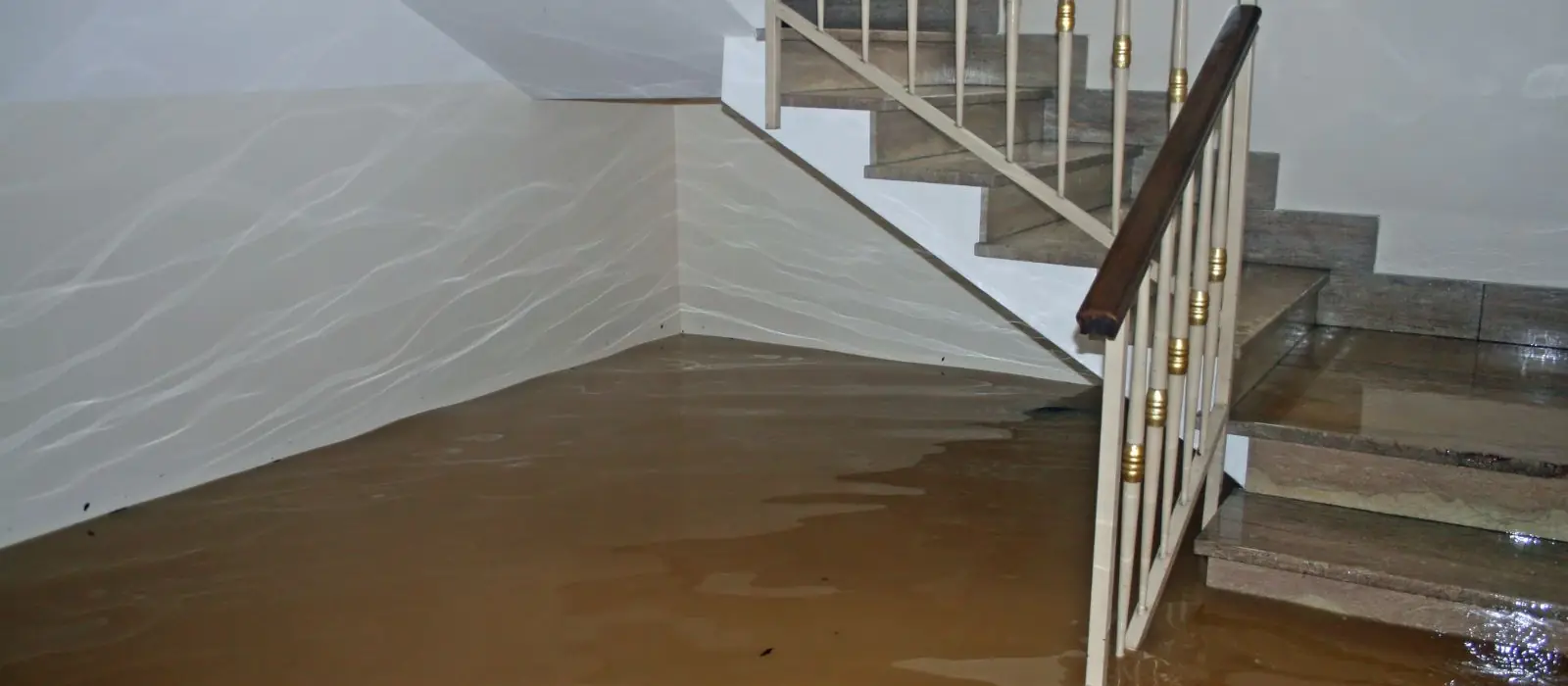
Finished versus unfinished changes everything
An unfinished basement with a bare concrete floor and block walls is the easy case. Extract the water, dry the slab and surfaces, and you are largely done. A finished basement with carpet, framed walls, insulation and a bathroom has more layers to lose.
Think of the final bill as a list of materials the water touched. Every layer between the concrete and the paint is another line.
| Basement type | Usually removed | Usually rebuilt |
|---|---|---|
| Unfinished | Stored goods, wet cardboard | Little or nothing |
| Partly finished | Carpet, padding, lower drywall | Flooring, drywall, paint |
| Fully finished | Floors, walls, insulation, trim | Most surfaces and fixtures |
Flooring decisions
Carpet and pad that sat in water are usually pulled. Laminate and engineered wood swell and rarely recover. Tile and sealed concrete often survive, though the subfloor beneath tile may need checking.
A floating vinyl plank floor can sometimes be lifted, dried and reinstalled if the water was clean and caught quickly. That depends on the product and the readings, so ask your crew to measure instead of assuming.
Drywall and insulation
Drywall wicks water upward like a candle wick. Crews commonly cut it above the visible water line, because the paper face holds moisture higher than the eye can see. Fiberglass insulation behind it holds water and is usually replaced.
Closed-cell foam board behaves better and may be dried in place. Every material you can save is a line item that disappears from the rebuild.
The mold question
Mold needs moisture. In a basement, damp concrete and still air give it plenty. The EPA mold guide says materials dried within 24 to 48 hours of a leak usually do not grow mold, which is why a fast start protects the budget.
If growth is already visible, the leak must be fixed first. Testing and remediation follow the S520 standard and are priced as a separate scope. See mold remediation for how that stage works, and ask whether your state licenses mold work.
Sump and drainage fixes are not restoration
A sump pump, interior drain tile, exterior grading, gutter extensions and a window well cover are all drainage fixes. They keep water out later. Restoration deals with the water that already got in.
- Restoration includes extraction, tear-out, drying, cleaning and rebuild.
- Drainage work includes pumps, drains, grading and backflow devices.
- Waterproofing coatings and membranes sit in a third bucket of their own.
Being honest here matters. Restoration is not waterproofing, and drying a basement does not stop the next storm from wetting it. If your basement floods more than once, budget for a drainage conversation separately.
Utilities and contents add lines too
Basements hold the furnace, water heater, electrical panel and laundry. Water around those appliances can mean a service call from a licensed trade before anything else is touched. Boxes of stored items, holiday decorations and old papers need to be sorted, and some are packed out for cleaning.
A basement laundry area is a common leak source on its own. Washer hoses fail slowly, and the leak may have been feeding the wall for weeks. Mention that history so the scope covers the full wet area.
From tear-out to rebuild
Most basements move through the same stages. Water comes out, damaged materials are removed, the space is dried to the target readings, and only then does the rebuild start. Rebuilding before the readings are dry is how finished walls end up wet again.
Plan the order with your crew. Electrical and plumbing rough work comes first, then insulation, then drywall, and flooring last. Walls closed too early can trap moisture, and floors laid too early can be ruined by the next wet day.
Some owners choose to rebuild only part of the basement and leave the rest raw for a while. That is a legitimate way to control scope, as long as the exposed concrete and framing are dry first.
A decision list before you approve a scope
- Ask for the water category in writing.
- Ask which materials are being removed and why.
- Ask how many days of drying are expected and how readings will be shared.
- Ask what is included in the rebuild and what is left for you or another trade.
- Ask whether a plumber or drainage contractor should look at the source.
Need a scoped plan for a flooded basement?
Call the 24/7 line and describe what the basement held. We will walk the space and put the plan in writing.
Mashpee note: sewage backup changes the scope
Many Mashpee homes still depend on septic systems, and the town is building a sewer system. MassDEP approved the town's five-phase Watershed Nitrogen Management Plan in 2015, and groundbreaking for the Water Resource Recovery Facility took place December 8, 2022. Sewer lateral construction covers areas north and south of Route 28.
For a basement, the practical question is what the water carried. If sewage or drain backup came in, it is Category 3 water. Porous materials such as carpet, pad, drywall and insulation are removed instead of dried, and surfaces get cleaned and sanitized. That roughly widens the tear-out to the whole wetted area, so the scope grows well past a clean-water job.
Not every property will be sewered. Non-sewerable properties may be required to replace Title V systems with innovative or alternative systems. If your system is changing, tell your crew so the plumbing and any backflow work are sequenced correctly.
One more document helps. The Mashpee Building Department holds Elevation Certificates for properties, which record a building's elevation. In a mapped flood zone, ask how your basement floor compares before you spend on finishing it again, and see Osterville and Marstons Mills for neighboring areas.
Water or mold in your home right now? Call the 24/7 line: (508) 446-9244
Questions Mashpee Homeowners Ask
Is a finished basement much more expensive to repair?
It usually has a bigger scope because more materials were wet. The price follows the number of layers removed and rebuilt, not the square footage alone.
A scoped inspection with a moisture meter is the only way to see the real number.
Can wet drywall be saved?
Sometimes, if the water was clean and readings drop quickly. Crews often cut it above the visible line, because moisture wicks higher than you can see.
If the water was Category 3, drywall comes out regardless of how it looks.
Does restoration stop my basement from flooding again?
No. Restoration repairs damage that happened. Pumps, drains, grading and waterproofing are separate drainage work.
Does sewage backup change the repair plan?
Yes. Category 3 water means porous materials come out and surfaces are cleaned and sanitized, which enlarges the scope.
Where do I find my Mashpee home's Elevation Certificate?
The Mashpee Building Department holds Elevation Certificates. Call 508-539-1400 to ask whether one is on file for your address.