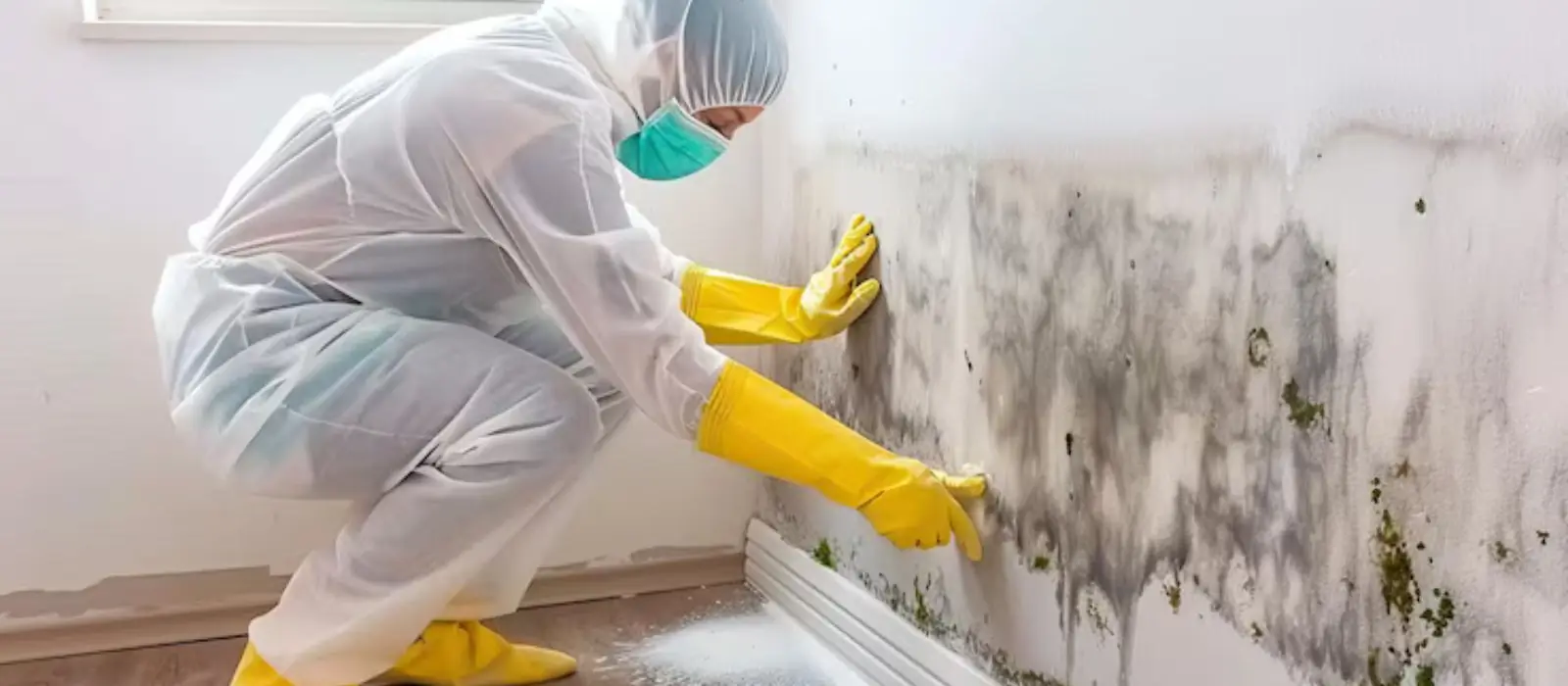
Mold Remediation in Mashpee Starts With the Water Source
Mold remediation in Mashpee means finding the moisture source, containing the affected area, removing mold and the materials it grew on, and drying the structure. Mold needs moisture to grow, so cleaning the surface without fixing the water problem only starts the clock again.
Callers often describe the leak first and the mold second: an upstairs toilet that leaked into the basement ceiling, an air conditioner condensate line that backed up, a roof or siding leak, a closet that stayed damp after a pipe break. Fix the leak and call about the mold. We follow the published ANSI/IICRC S520 standard for mold remediation, and you can ask any company whether its crews do.
Not sure it is mold?
A stain, a musty smell or a damp patch is enough to ask for an inspection. Testing and remediation follow S520, and health questions belong to a physician.
Black Mold Cleanup and Mold Removal: What the Words Mean
People search for black mold, but color does not tell you what a mold is. Many species look dark, and only testing identifies them. What matters in practice is how much area is affected, what material it is growing on and why the area is wet.
Mold removal is the physical work: HEPA vacuuming, damp wiping, removing porous materials such as drywall or ceiling tile and cleaning framing. It is done inside containment so spores are not spread to clean rooms.
What a Remediation Job Involves
- Inspection. A technician looks for moisture and mold, takes moisture readings and, when needed, recommends testing by a separate party.
- Fix the source. The leak or condensation problem is repaired by the proper trade before or during remediation.
- Containment. Plastic barriers and negative air machines keep the work area sealed from the rest of the house.
- Removal. Mold-damaged porous materials are cut out and bagged. Non-porous and structural surfaces are HEPA vacuumed and cleaned.
- Drying. Dehumidifiers and air movers bring the area to normal moisture levels.
- Verification. Visual checks and, if wanted, independent post-remediation testing confirm the work.
If water damage came first, see water mitigation, since drying quickly is the best way to limit mold.
Mold After Water Damage
The Environmental Protection Agency advises drying water-damaged materials within 24 to 48 hours to limit mold growth. After that window, mold can start on wet drywall, carpet pad, ceiling tile and wood.
That is why a leak that is fixed late still leaves a mold problem. In Mashpee, that can follow a storm, a long power outage that stalled drying or a slow leak behind a bathroom wall. If wet materials sat for more than a couple of days, ask for a moisture reading and an inspection.
Mold Clearance for a Home Sale or Loan
Some callers ask for independent clearance testing because a lender or buyer will not close until mold is removed. Clearance testing is done by a separate party after remediation. We cannot promise how any lender or buyer will respond, but written scope and a clearance report give them something concrete to review.
If a sale deadline is close, tell the dispatcher so the schedule can be planned around it.
Testing, Licensing and Standards
Ask whether your state licenses mold work and whether the company follows ANSI/IICRC S520. Testing is useful when the cause is unclear or when a lender requires it, but it is not required to start removing visible mold from wet materials.
The Mashpee Building Department can tell you whether rebuilding after removal needs a permit. Its main line is 508-539-1400.
What Affects the Cost of Mold Remediation
Cost comes from the size of the affected area, the material it grew on, how much containment is needed, how many days of drying follow and how much rebuild is required. We explain scope and price before work starts.
- Area affected and number of rooms.
- Materials: drywall, wood, insulation, ceiling tile.
- Containment and air filtration needs.
- Drying days and equipment.
- Rebuild scope after removal.
Insurance treats mold according to the cause. Mold that follows a covered sudden and accidental loss may be handled differently from mold that grew from a long-term leak. Ask your insurer, and keep photos and records.
Mold Calls From Across the Cape
We serve Mashpee and the nearby towns of Cotuit and Osterville, where coastal weather can bring moisture into a house. After removal, water damage repair rebuilds drywall, trim and paint.
Water or mold in your home right now? Call the 24/7 line: (508) 446-9244
Common Questions
How do I know if I have mold or just a stain?
A technician can take moisture readings and look for growth. Dark stains can be mold, mildew or dirt, and only testing identifies species. What matters most is whether the area is wet.
Do I need testing before remediation?
Not always. Visible mold on wet materials can be removed without testing. Testing helps when the cause is unclear or a lender or buyer asks for documentation.
Can I just clean mold with bleach?
Bleach does not solve the moisture problem, and it does not penetrate porous materials. Fix the water source and remove or clean affected materials following S520 practice.
Does Massachusetts license mold work?
Ask whether your state licenses mold work and request the company's answer in writing. We do not state licensing rules we cannot verify on a state agency page.
Can mold come from an old leak?
Yes. Mold grows on any wet organic material, including old leaks that were fixed but never dried. A moisture reading tells you whether the area is still wet.