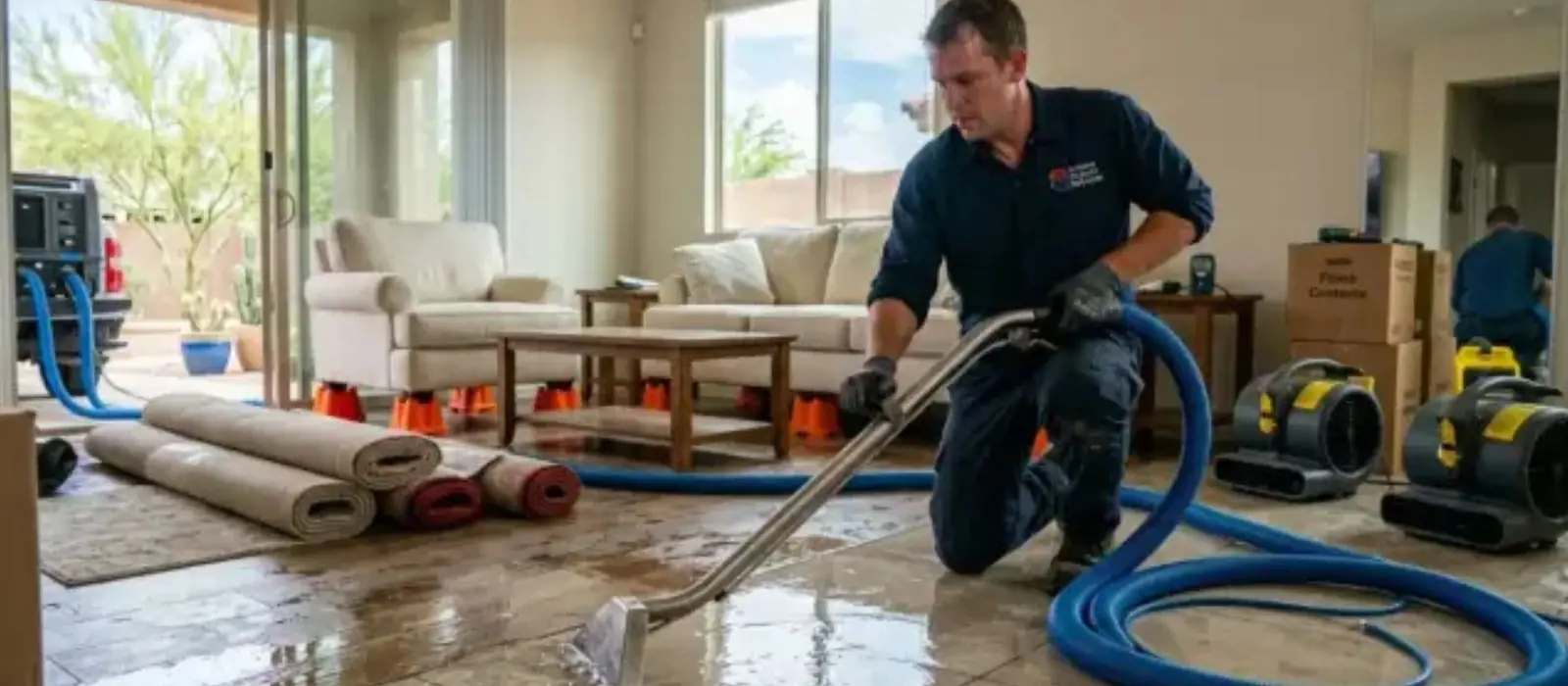
Emergency Water Removal When Water Is Standing in the House
Emergency water removal in Mashpee is the pumping and extraction of standing water from basements, first floors and crawl spaces. It is the step that comes before drying, because extraction removes far more water than any dehumidifier can.
If water is standing in your home, shut off the main water valve if the source is a pipe and you can reach it safely. Leave rooms where water touches outlets, cords or the electrical panel, and call the 24/7 line. Water that reaches electrical equipment is an emergency before it is a restoration job.
Do not use a household vacuum
Shop vacuums rated for wet pickup are different, but a household vacuum with standing water is an electrical hazard. Wait for the crew if you are unsure.
Burst Pipe Water Damage
A burst pipe sends gallons per minute through a ceiling or wall, and the damage is greatest in the first hour. The immediate steps are the same every time: find and close the main water shutoff, open a faucet at the lowest point to drain the line, switch off power to the affected area if you can do so from a dry spot and call.
If you cannot close your own shutoff, the Mashpee Water District oversees and maintains the town water system and can advise on the service line. Once the source is closed, a crew extracts the water, opens ceilings and wall cavities to release trapped water and sets up drying equipment.
Pipes can split during a hard freeze in an unheated home, and supply lines, ice maker lines and washing machine hoses fail without any weather at all. Plumbing repair is separate from water removal, so plan to hire a plumber for the failed pipe.
Pumps, Extraction Units and Moisture Meters
The equipment depends on the depth of the water and what the floor is made of.
| Equipment | What it does |
|---|---|
| Submersible pumps | Remove deeper standing water from basements and crawl spaces |
| Truck-mounted or portable extraction units | Pull water from carpet, pad and hard floors |
| Moisture meters | Read how wet drywall, wood and subfloor still are |
| Thermal imaging camera | Shows cold, wet areas behind surfaces that look dry |
| Air movers and dehumidifiers | Take over once standing water is gone, as covered under water mitigation |
What Happens on an Emergency Water Removal Visit
- The dispatcher asks where the water is coming from, how deep it is and whether sewage or electrical risk exists.
- The crew confirms the source is stopped and checks the area for hazards.
- Pumps and extraction units remove standing water, with the deepest areas first.
- Moisture readings show which floors, walls and cavities still hold water.
- Wet materials that cannot be dried are removed, then drying equipment is set up.
- You get an explanation of scope and price before further work starts.
Clean water and contaminated water follow different paths, as explained on the water damage cleanup page.
The categories of water and the drying goals referred to here come from the ANSI/IICRC S500 standard for professional water damage restoration.
Crawl Spaces, Garages and Sunrooms
Not all standing water is in a basement. Crawl spaces collect water from groundwater and drainage, garages take in runoff, and sunrooms and additions on slabs can flood when a door or window leaks during a storm.
In a crawl space, extraction is followed by checking insulation and wood for moisture. In a garage, the main risk is water getting into the walls and the attached house. Where water came from rain and runoff rather than a pipe, treat it as contaminated until a technician says otherwise.
What Affects the Cost of Water Removal
Cost is set by the depth and volume of water, the time it takes to extract it, the type of floor and whether materials need to be removed. We explain scope and price before work starts, after seeing the site.
- Water depth and square footage.
- Access to the affected area and whether pumps can reach it.
- Water category and any disposal needs.
- Whether drying and demolition follow extraction.
Insurance may cover a sudden and accidental event like a burst pipe, but flood is usually excluded, so ask your insurer what applies and keep photos and receipts.
When Standing Water Is an Emergency
It is an emergency any time water is still coming in, is deeper than a few inches, is near the panel or outlets, or carries sewage. Call the line at any hour. It is answered around the clock, every day of the year, and we aim for same-day response when available without promising an arrival time.
Until the crew arrives, stay out of deep water, keep children and pets away from it, lift valuables and photograph the damage. Do not enter a flooded basement to check the panel. If you smell gas or see sparking, leave the house and call 911 and the utility.
Emergency Pumping Across the Area
We serve Mashpee and the nearby towns of Marstons Mills, Falmouth and others on the service area page. For storm-driven flooding, see flood damage restoration.
Water or mold in your home right now? Call the 24/7 line: (508) 446-9244
Common Questions
Do you handle emergency water removal at night or on weekends in Mashpee?
Yes. The line is answered 24 hours a day, every day. Crews are dispatched for standing water at night and on weekends, and we aim for same-day response when available without promising an arrival time.
What should I do first when a pipe bursts?
Close the main water shutoff, open a low faucet to drain the line, switch off power to the affected area only if you can reach the switch from a dry spot and call the emergency line. Take photos before cleanup.
Can I remove the water myself?
Small clean spills, yes. For standing water in a basement or near electrical equipment, wait for a crew. Household vacuums and electric fans around water are unsafe.
How long does water removal take?
Extraction itself is usually quick compared with drying, but it depends on the depth and the equipment needed. Drying and any removal of damaged materials follow.
Will pumping solve a recurring wet basement?
No. Pumping removes the water that is there. If water returns, the cause may be drainage, a sump failure or groundwater, which needs a different fix.