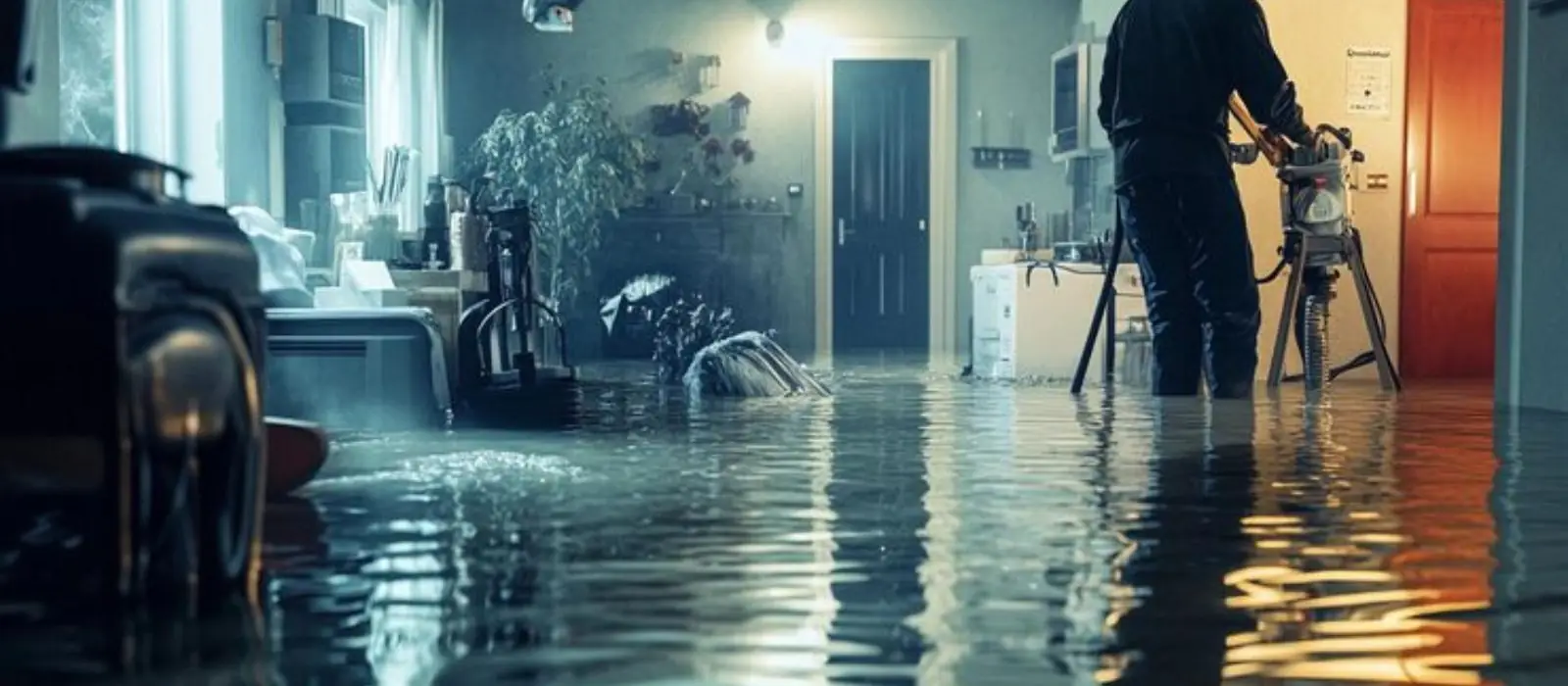
What Water Mitigation Means in the First 72 Hours
Water mitigation is the first stretch of a water loss, usually the first 24 to 72 hours. The goals are simple: stop the source, remove standing water, and start controlled drying before wet drywall, insulation and subfloor begin to break down. In Mashpee that work often starts at night, after a supply line lets go or a storm drives water through a wall.
If water is moving through your house right now, shut off the main water valve if you can reach it safely. Keep out of any room where water touches outlets, cords or the electrical panel. Then call the 24/7 line so a crew can be dispatched while you document the damage with photos.
Not sure the water is stopped?
Tell the dispatcher what you see. A short description of where the water came from and what it has reached is enough to plan the first visit.
Is That Damp Wall a Mitigation Job? Signs Homeowners Describe
Most people do not search for the trade name. They describe what they see: water dripping from an upstairs closet ceiling, a washing machine valve that let go, a hardwood floor that has started to cup, a basement ceiling stain under a bathroom, or a crawl space with water on the ground.
All of those are mitigation problems. The trade name just means the work of limiting how far the water travels and how long materials stay wet. If the question in your mind is whether this is serious enough to call, the answer is that a stain which keeps growing or a floor that keeps feeling cold and damp needs a moisture reading, not another day of waiting.
Why Speed Matters More on the Cape
The Environmental Protection Agency advises drying water-damaged materials within 24 to 48 hours to limit mold growth. That window is short, and it runs from the moment materials get wet, not from the moment you notice.
Mashpee adds its own timing problems. The town's hazard mitigation plan records the January 2005 blizzard, which brought up to 3 feet of snow in places, gusts up to 65 mph and major power outages. Drying equipment needs steady power, so a storm that causes damage can also delay the work. Calling early gets you in line before the rest of the storm calls come in.
Coastal flooding is the other pattern. The National Weather Service recorded a Hurricane Bob storm surge of 12 to 15 feet at Mashpee in 1991. Surge water is a different problem from a broken pipe, and flood damage restoration covers how crews treat it.
How Our Crews Mitigate a Water Loss
A mitigation visit follows the same order on almost every job. The details change with the water category and the building, but the sequence keeps the work honest and easy to document for your insurer.
- Stop and secure. Find the source, close the valve or isolate the line, and make the area safe. Where sewage or electrical risk exists, the crew treats the room as off limits until it is clear.
- Classify the water. Clean supply water, grey water and sewage are handled differently under the ANSI/IICRC S500 standard. The category decides what can be dried in place and what must be removed.
- Extract. Pumps and extraction units pull standing water. Extraction removes far more moisture than drying equipment can, so it comes first.
- Map the moisture. Moisture meters and a thermal imaging camera show where water traveled behind walls and under floors, not just where it is visible.
- Dry with equipment. Air movers push dry air across wet surfaces while LGR dehumidifiers pull moisture out of the air. Equipment is placed by the readings, not by habit.
- Monitor. Crews return to take readings and adjust equipment until materials reach the drying goal. Equipment stays until the readings say it can go.
Structural Drying: Walls, Floors and Cavities
Structural drying is the part of mitigation that happens inside the building rather than on the surface. Water moves into wall cavities, under baseboards and between floor layers faster than it dries out of them.
To dry a cavity, a technician may drill small holes or lift a baseboard so air can move. Wet insulation is usually removed because it holds water against framing. Hardwood and engineered flooring may be dried with mats that pull moisture from below, and sometimes the right call is to remove a board or two to relieve cupping.
Not every wet material is worth saving. Wet carpet pad from clean water can often be dried or replaced cheaply, while saturated drywall from contaminated water is removed. A good crew tells you which is which and why before cutting anything.
| Material | Typical mitigation approach |
|---|---|
| Drywall wet from clean water | Dry in place when readings allow, remove if it is saturated or sagging |
| Wet insulation in a wall | Usually removed so the cavity can dry |
| Hardwood floor | Controlled drying and moisture checks, sometimes a board removed to relieve cupping |
| Carpet and pad | Extract, then dry or replace the pad depending on water category |
| Any material hit by sewage | Removed and discarded under S500 practice |
What Affects the Cost of Water Mitigation
Mitigation cost is driven by facts that can only be seen on site, which is why we explain scope and price before work starts. We do not quote a number over the phone without knowing what is wet.
- The water category: clean, grey or contaminated.
- How many square feet and how many rooms are affected.
- Which materials are wet: drywall, plaster, hardwood, tile over subfloor, insulation.
- How many days drying equipment must stay and how much of it is needed.
- Whether demolition of wet materials is needed before drying can work.
Insurance is a separate question. Sudden and accidental water damage, like a burst pipe, is often covered by a homeowners policy, while slow leaks and neglect often are not, and flood damage is usually excluded and needs its own flood policy. Check your policy or ask your insurer, and keep photos and moisture readings. If repair follows drying, water damage repair covers the rebuild.
When Standing Water Is an Emergency
Treat it as an emergency when water is still entering the house, when it has reached outlets or the electrical panel, when it carries sewage, or when children or older adults live in the house and rooms cannot be used. In those cases call the 24/7 line right away and do not wait for business hours.
While you wait, lift valuables and small furniture off wet floors, open closet doors so air can circulate, and keep people and pets out of contaminated water. If any electrical or gas risk exists, leave and call the utility or 911 before calling the restoration line. Do not use a household vacuum on standing water.
We do not promise an arrival time, because storms and road conditions change it, but the line is answered around the clock and we aim for same-day response when available.
Mitigation Across Mashpee and Nearby Towns
Crews work across Mashpee, from the Mashpee Commons area at the Rotary to the shoreline neighborhoods near Popponesset Bay and Waquoit Bay. The service area also reaches Falmouth, Cotuit and the other nearby towns listed on the service area page.
The town's Building Department is the place to ask if rebuild work after drying needs a permit. Its main line is 508-539-1400. Where rebuild work is needed, water damage cleanup and repair follow the mitigation visit.
Water or mold in your home right now? Call the 24/7 line: (508) 446-9244
Common Questions
Do you handle water mitigation emergencies at night or on weekends in Mashpee?
Yes. Drying starts better the sooner equipment is placed, so night calls are routine. Describe the leak and the rooms involved, and a crew is sent. Arrival times are not promised, but the target is the same day.
What is the difference between water mitigation and water damage restoration?
Mitigation is the emergency stage: stopping the source, extracting water and drying. Restoration is the full path back to a finished home, which can include cleanup, rebuild and repair after the drying goal is met.
How long does structural drying take?
It depends on the materials, the water category and the readings. A technician sets a drying goal, takes moisture readings on each visit and removes equipment only when materials reach it. Anyone who names a fixed number of days before seeing the house is guessing.
Can I leave the drying equipment off at night?
Please do not. Air movers and dehumidifiers only work while they run, and shutting them off early lets materials stay damp. If the noise is a problem, tell the crew and they can adjust placement or the schedule.
Will my insurance cover mitigation?
Sudden and accidental water damage is often covered, but coverage depends on your policy and the cause. Ask your insurer before you decide, and keep photos, moisture readings and receipts. We can provide documentation of the scope for your claim.