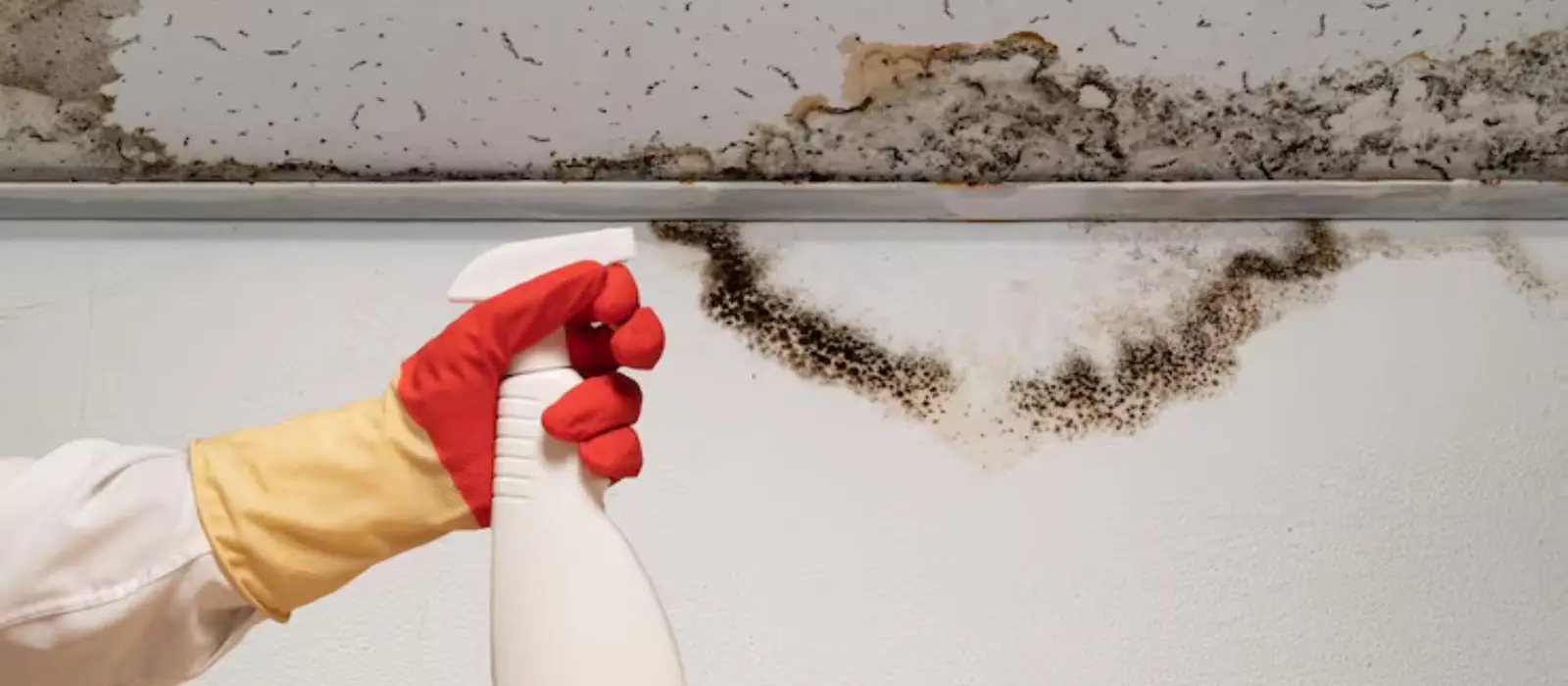
Why a bathroom ceiling grows dark spots
Mold needs moisture to grow, and that is the EPA's starting point for every home. Your bathroom ceiling is the coldest, wettest surface in the room, because warm shower steam rises and settles there every day.
Black mold is a popular label, not a diagnosis. This page does not identify any growth by its look, and questions about health belong with a physician. For the house, the useful question is simple. Where is the water coming from?
| Moisture source | What you tend to see | First move |
|---|---|---|
| Weak or blocked exhaust fan | Spots spread loosely across the ceiling, heavier in corners | Run the fan during every shower and check that it moves air |
| Fan duct that ends in the attic | Dark patches plus damp insulation above the room | Have the duct path checked so steam leaves the house |
| Leak from above | A ring-shaped stain, bubbling or sagging paint, spots that return | Find and stop the leak before any cleaning |
| Shower steam and a closed window | Fine spotting near the outside wall | Open the window or run the fan, as the EPA advises |
The EPA's own advice for bathrooms is short. Run the bathroom fan or open the window when showering. It also suggests indoor humidity below 60 percent, ideally between 30 and 50 percent, which gives growth much less to work with.
Surface stain or hidden leak? Five checks
A stain made by steam and a stain made by a leak can look alike from the floor. These checks take ten minutes and a flashlight.
- Look at the shape. Steam staining tends to spread in a loose pattern. A leak often leaves a ring with a darker edge.
- Press the paint beside the stain with a gloved fingertip. Soft, crumbly or bubbling drywall means water has been there for a while.
- Check what sits above. That may be an upstairs bathroom, a laundry room, an attic with a roof penetration, or a vent pipe.
- Watch the stain after rain and after someone uses the bathroom upstairs. A patch that grows on a wet day points to the roof or flashing.
- Take a dated photo and mark the edge in pencil. If the patch moves past the line in a week, water is still arriving.
Hidden moisture is the harder case. The EPA notes that mold may sit on the back side of drywall and on the top side of ceiling tiles, where you cannot see it. A pro uses a moisture meter to read dampness inside the material, and a thermal imaging camera to show cool, wet zones behind paint that looks normal.
Where DIY should stop
Under about 10 square feet, roughly a 3 foot by 3 foot patch, the EPA treats ceiling mold as a job many homeowners can handle. Past that size the agency sends readers to its remediation guidance. Stop and call a professional when you see any of these.
- The stain is larger than about 10 square feet, or it covers more than one ceiling area.
- The drywall is soft, sagging or stained through, which means it holds water.
- The spots come back after cleaning, so the source is still active.
- You smell mold but cannot see it. The EPA says to suspect hidden growth in that case.
- The water source is unknown, or it may be sewage or other contaminated water.
- Anyone in the home has health questions about mold exposure. That is a conversation for a physician.
Water near a ceiling light or fan
If water drips from a light fixture or fan housing, stay out of the room. Cut the power only if you can reach the panel while standing dry. For any shock or fire risk, call the electric utility or 911 before you call the restoration line.
What happens when the ceiling has to open
A professional starts by finding the moisture with meters and a camera, then stops or flags the source. If the leak came from a pipe, the wet area is dried first, which is the work described under water mitigation. Drying comes first because mold work done on a wet ceiling is wasted effort.
Next comes containment, so spores and drywall dust do not travel to the rest of the house. Poly sheeting and filtered air machines are common tools. Affected drywall is cut out, bagged and carried out, and the framing is cleaned and dried.
The ceiling is then rebuilt, which is ordinary water damage repair. The full mold sequence, from assessment to cleanup, is laid out on the mold remediation page. Ask any company whether its crews work to ANSI/IICRC S520, the published industry standard that governs mold remediation work.
On cost, the number depends on the area, the materials, drying time and the rebuild. A scoped inspection gives the real figure, and the scope and price should be explained before work starts.
Insurance, in general terms
The Massachusetts Division of Insurance notes that standard homeowners policies usually cover sudden and accidental damage. A slow leak that went unnoticed for months is treated differently by many policies. Read your policy, photograph everything, and ask your insurer what applies before any ceiling comes down.
Mashpee note: permits and licensing when a ceiling is rebuilt
If the ceiling must be opened and rebuilt, the Mashpee Building Department handles permits for construction, reconstruction and renovation. Whether a given repair needs one depends on the scope, so call the main line at 508-539-1400 before the first cut. The office is open Monday to Friday, 8:00 to 4:30.
Ask your contractor, in writing, who pulls any permit that applies. A rebuilt ceiling that skips a required inspection can cause trouble later, for example at a sale.
Also ask whether your state licenses mold work, and what that means for the company you are about to hire. The answer should come from the company, with a clear explanation, before work starts.
Older housing makes this more likely. About 62 percent of Falmouth homes were built before 1980, so original fans and long duct runs are common next door in Falmouth. In Marstons Mills, 458 of the 3,549 housing units in ZIP 02648 were vacant in recent census figures, and an empty house can hide a slow leak for weeks.
Water or mold in your home right now? Call the 24/7 line: (508) 446-9244
Questions Mashpee Homeowners Ask
Is the dark patch on my bathroom ceiling definitely black mold?
Nobody can tell from a photo or a glance, and this page cannot diagnose it. Color is an everyday label, not an identification. What matters for the house is the moisture behind it. Health questions belong with a physician.
Will a new exhaust fan fix a moldy bathroom ceiling?
A working fan helps stop new moisture, but it does not clean or dry what is already there. If the ceiling is soft or the spots return, look for a leak above. Also check where the fan duct ends, since steam pushed into an attic only moves the problem.
How quickly can a ceiling leak lead to mold?
Drying inside a window of 24 to 48 hours is the EPA's advice for wet areas and belongings, so growth does not start. That is why a ceiling leak should be stopped and dried the same week, not the same season.
Does homeowners insurance cover a bathroom ceiling leak?
It depends on the cause and your policy. Sudden and accidental damage is often covered, while gradual leaks and neglect often are not. Check your policy and ask your insurer, and do not assume approval.
Do I need a permit to rebuild a bathroom ceiling in Mashpee?
The Mashpee Building Department handles permits for construction, reconstruction and renovation. A small patch and a full ceiling replacement are different scopes, so call 508-539-1400 and describe the work before you start.