The two questions that decide everything
Before you decide anything about carpet, answer two questions. Where did the water come from, and how long has it been there? The first sets the category, the second sets the odds.
ANSI/IICRC S500 sorts water into three categories. Category 1 comes from a clean source such as a supply line. Category 2 carries some contamination, such as washing machine discharge. Category 3 is grossly contaminated, which includes sewage and floodwater.
| Water source | Category | Carpet outcome |
|---|---|---|
| Broken supply line, sink overflow, rain through a clean ceiling | 1 | Often dried in place if caught fast |
| Washer or dishwasher discharge, aquarium | 2 | Pad usually replaced, carpet may be cleaned and dried |
| Sewage, toilet backup, rising floodwater | 3 | Carpet and pad usually discarded |
Why the pad matters more than the carpet
Carpet fibers dry fairly quickly. The pad underneath is a foam or fiber sponge that holds water against the subfloor. Even when the top looks dry, the pad can stay wet for days.
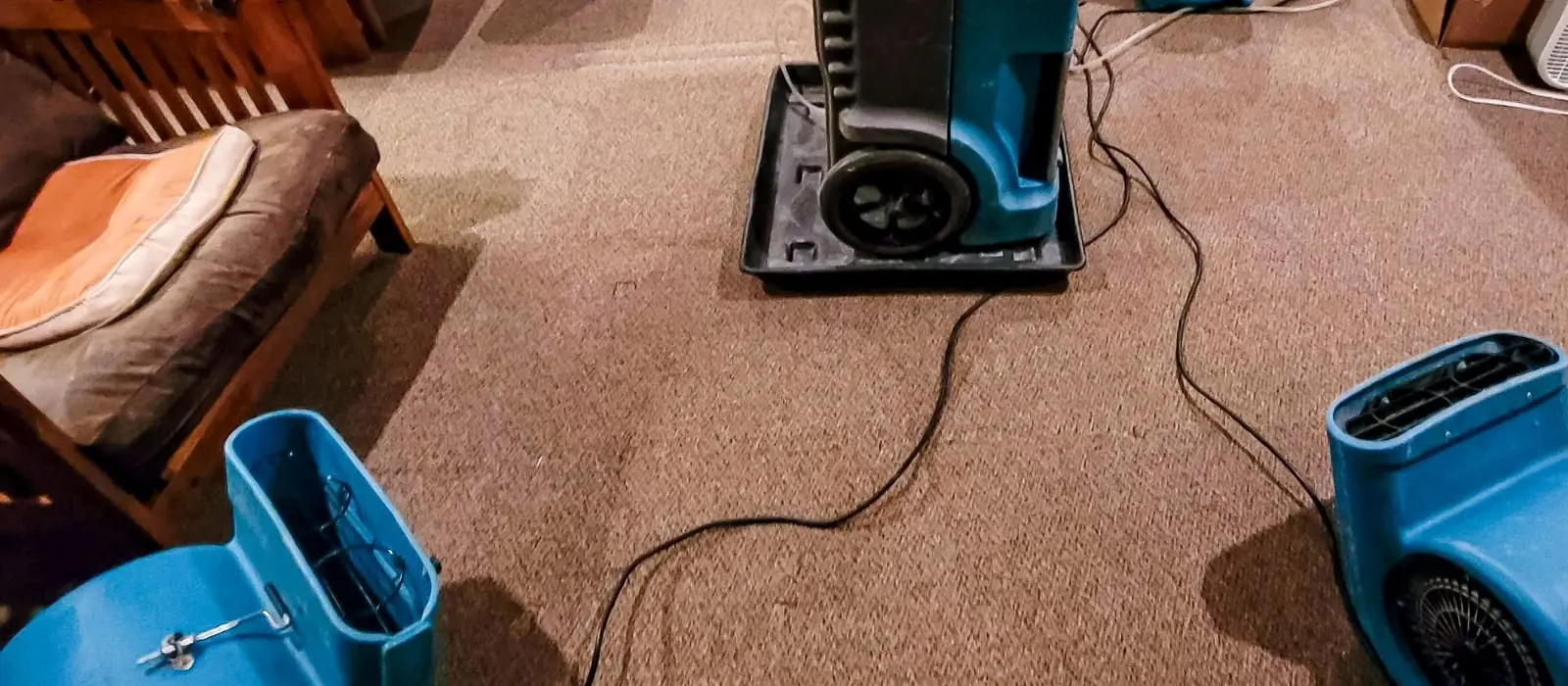
On a clean water loss, crews often pull the carpet back from the tack strip, discard the wet pad, and dry the subfloor and the back of the carpet with air movers. Then the carpet is re-stretched over new pad. That is a smaller job than full replacement, though the real scope and price come from an inspection with meter readings.
The EPA says that absorbent or porous materials like carpet may have to be thrown away if they become moldy, because mold can grow into gaps and crevices. That is the practical reason for acting inside the 24 to 48 hour window.
A first-day plan for wet carpet
- Stop the water. Shut the valve or the main if the source is a supply line.
- Check for electrical risk. If outlets or cords sit in standing water, stay out. Shut off power at the panel only when you can get to it on dry ground.
- Identify the source and write it down. This sets the category.
- Lift furniture off the carpet and place foil or plastic under the legs so stain and rust do not transfer.
- Run air and a dehumidifier if the water was clean. Do not run a household fan across suspected sewage.
- Photograph the room, the wet area and the source before moving anything.
- Call a crew with extraction units and moisture meters if the wet area is larger than a small spill.
Do not use a household vacuum on wet carpet. It is not built for water and creates a shock hazard. Extraction units made for water do the heavy lifting.
Signs the carpet will not recover
- Sour or musty smell that returns after drying
- Pad that stays damp or crumbles when pressed
- Backing that has delaminated or separated from the fibers
- Visible dark spots on the back of the carpet
- Any contact with sewage or floodwater
If mold shows up, the leak must be fixed first. Mold work is then done to ANSI/IICRC S520, and health questions belong to a physician. For work beyond drying, see mold remediation.
Documenting carpet for an insurance claim
State insurance guidance advises taking photos inside and outside, noting how high the water reached, and separating damaged items from undamaged ones. For carpet, add a few specifics. Photograph the pad, the tack strip edge and the subfloor after the carpet is lifted. Keep a small cut sample if the carpet is being discarded.
Write down the date and time you found the water, the source, and when you started drying. If a crew does the work, ask for their moisture readings and drying logs.
How carpet is dried when it is worth saving
Drying carpet in place is about moving air through the layers. Crews lift a corner, slide a wand or float the carpet on air movers so air passes under the backing, and run a dehumidifier to pull the moisture out of the room. Closing the room helps the dehumidifier do its job.
Readings are taken on day one and again each day. If the subfloor stays wet while the carpet surface dries, the job is not done. Wood subfloors, concrete slabs and basement floors all dry at different speeds, which is why a set number of days cannot be promised in advance. Homes in Marstons Mills with finished basements and slab floors see this often.
What a crew does when carpet is going
For contaminated water, crews cut the carpet into manageable strips, bag it and remove it. The subfloor is cleaned, treated and dried before anything new goes down. This work belongs under water damage cleanup and sometimes flood damage restoration if the water was widespread. The same steps apply for homes in Osterville and other nearby villages.
Mashpee note: why floodwater carpet is treated as contaminated
Mashpee's coast has a record of storm flooding. The town's hazard plan notes that Hurricane Carol in 1954 caused flooding along Shore Drive, and Hurricane Bob on August 19, 1991 flooded the causeway near Amy Brown Road. Coastal floodwater is the kind of water that sits in Category 3, because it picks up sewage, soil and chemicals on its way in.
That is the practical reason floodwater carpet is usually discarded, even when it looks fine. The material cannot be reliably cleaned, so the plan is removal. Check your coverage before a storm and not after, since the Massachusetts Division of Insurance says standard homeowners policies do not cover flood. A separate flood policy is needed, and new flood coverage typically has a 30 day wait and cannot be applied retroactively.
After a flood, photograph how high the water reached, take pictures of carpet before it is removed, and keep damaged and undamaged items apart. Those photos are the record your insurer will ask for.
Water or mold in your home right now? Call the 24/7 line: (508) 446-9244
Questions Mashpee Homeowners Ask
Can I save carpet that got wet from a burst pipe?
Often yes, if it is clean supply water and drying starts within 24 to 48 hours. The pad is usually replaced and the carpet dried and re-stretched.
Why is padding thrown out when the carpet is saved?
Pad acts as a sponge and holds water against the subfloor. It is cheap relative to the risk of leaving it wet.
Is sewage water on carpet ever safe to clean?
No. Category 3 water is grossly contaminated, so carpet and pad are normally discarded. Keep people and pets out of the area.
How do I know if the carpet is fully dry?
Touch is not enough. A moisture meter on the carpet, pad area and subfloor, compared with a dry area, is the reliable test.
Does homeowners insurance cover floodwater on carpet?
Flood needs its own policy, since standard homeowners coverage leaves it out, per state insurance regulators. Check your declarations page and ask your insurer about any water backup endorsement.
Which Mashpee storms flooded the shoreline?
Hurricane Carol (1954) flooded along Shore Drive and Hurricane Bob (August 19, 1991) flooded the causeway near Amy Brown Road, per the town's hazard plan.