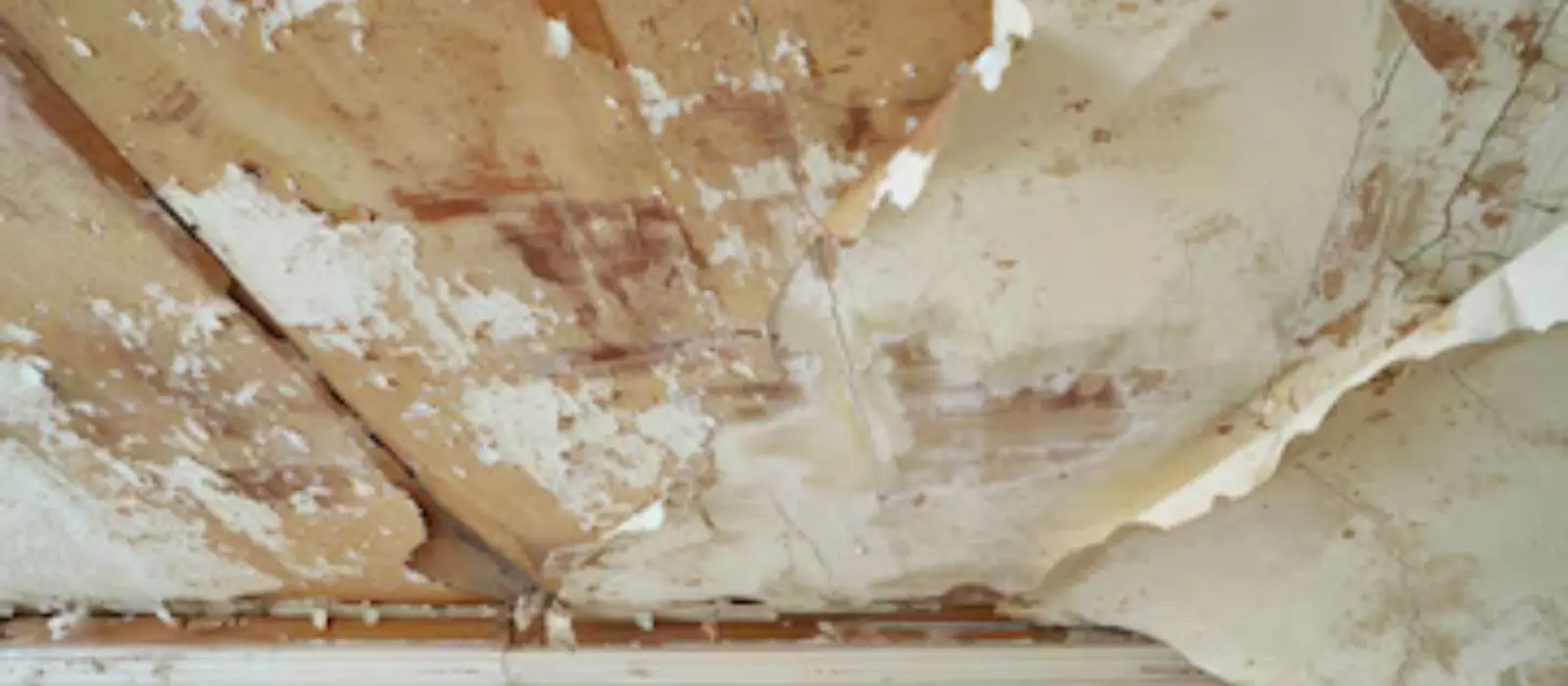
Start with the ceiling shape, not the stain color
The color of a stain tells you little. The shape of the ceiling tells you a lot. A flat, dry stain means the water came and went. A bulge, a drip or a belly in the drywall means water is still sitting above it, and the weight is growing.
A gallon of water weighs about 8.3 pounds. A drywall ceiling holding several gallons in one pocket can let go without warning. If the ceiling is sagging, keep people and pets out of that room.
If it is bulging right now
Put a bucket under it and move out from under the sag. If water is dripping near a light fixture or outlet, stay out of the room and call the utility or 911 about the electrical risk. Then call the restoration line, which can talk you through whether the bulge should be opened to drain.
Match the ceiling clue to the likely source
| Clue | Likely source | First action |
|---|---|---|
| Stain directly below a bathroom or laundry | Supply line, drain or tub seal above | Shut off water to that fixture |
| Stain near an outside wall or under the roof edge | Roof leak, flashing or ice dam | Photograph, tarp if safe, call a roofer |
| Rings that spread after rain only | Roof or chimney flashing | Track weather against stain growth |
| Dripping near a light fixture | Water inside the ceiling cavity and wiring | Turn off the circuit if safe, stay clear |
| Stain with no rain and no fixture above | Condensation, duct or HVAC line | Check the attic and vent runs |
Two sources can be present at once. An old roof stain can be joined by a new plumbing leak, and the older one tends to get blamed for both.
What a restoration crew does with a wet ceiling
The goal is to stop water moving, find where it sits and dry it. The crew scans from below with a thermal imaging camera, confirms with a moisture meter, and opens the ceiling only where readings say the material is saturated.
Insulation above a wet ceiling acts like a sponge. Wet batts are usually removed because they hold water against the drywall and the framing for days. Dry framing is left and dried with air movers and a dehumidifier.
Painting over a stain does not fix anything. Stain-blocking primer helps once the area is dry, but wet drywall will lift paint again within weeks. Dry first, then repair, then paint, which is the order our water damage repair work follows.
Quick decision list for the next two hours
- Look up. Is the ceiling flat, bulging or cracked? A bulge changes everything.
- Move furniture and electronics out from under it. Cover what you cannot move with plastic.
- Find and stop the source if it is a plumbing line. Shut the fixture valve or the main.
- Photograph the ceiling, the room and anything damaged. Take a wide shot and a close one.
- Open windows or run a fan if it is dry outside, to start moving air.
- Call a restoration company before you call a painter.
If the source is rain coming through the roof, a roofer has to fix that. A restoration crew handles the wet interior. The two jobs are separate, and having the drying done early keeps the roofer's repair from trapping moisture behind new finishes.
Ice dams and winter ceilings
Snow melts on the warm part of the roof and refreezes at the cold edge. The ridge of ice that builds there holds meltwater back, and the water finds its way under shingles and into the ceiling below. The stain tends to show up near exterior walls.
Do not chip at ice with a hammer or climb up to do it. You can tear shingles or fall. Better insulation and air sealing in the attic prevents the problem, and a roofer can tell you what your roof needs.
When it is a collapse, not a stain
A ceiling that has already fallen is a cleanup job as much as a repair one. Debris is wet and heavy, and loose drywall can hide insulation, nails and wiring. Wear gloves and sturdy shoes, and stay away from any live wiring. If the water came from a toilet or drain line, treat the debris as contaminated and let a crew handle it. See our water damage cleanup page.
Ask your insurer how it handles sudden damage versus long-term leaks. Per the Division of Insurance, sudden and accidental losses are the usual coverage, and long-term leaks are the usual dispute. Photos taken before cleanup help.
Mashpee note: check the ceiling after the big storm events
The town's hazard plan records some of the weather Mashpee has actually seen. On September 3, 2013, thunderstorms flooded the Mashpee Rotary and parts of Route 28 and Route 151. On January 24, 2005, a blizzard brought up to 3 feet of snow in places, gusts to 65 mph and major power outages.
Neither event is a prediction, but both point to one habit. After a storm that drops heavy rain or heavy snow, walk the top floor and look at the ceilings, and the attic if you can reach it safely.
Heavy snow loads and wind-driven rain push water under shingles, and the first sign is often a faint ring that was not there last week. Catching it that week means a dry-and-repaint job. Catching it months later often means opening the ceiling.
Water or mold in your home right now? Call the 24/7 line: (508) 446-9244
Questions Mashpee Homeowners Ask
Should I pop a bulging ceiling?
Only if the bulge is not near light fixtures or wiring and you can stand on a dry floor clear of the sag. A small controlled hole lets the water drain instead of letting the whole section drop. If you are unsure, leave the room and call for help.
Can a ceiling stain be painted over?
Not until the area is dry and the source is fixed. Painting over a wet ceiling traps moisture and the stain returns. A crew can confirm dryness with a moisture meter.
Does wet insulation have to be removed?
Usually yes when it is saturated. Wet insulation holds water against drywall and framing. Dry framing can be dried in place.
How fast does a wet ceiling need attention?
EPA guidance sets a 24 to 48 hour drying target. A ceiling is harder to dry than a floor, so start early.
Who do I call first, a roofer or a restoration company?
Call the restoration line if the interior is wet and a roofer for the cause on the roof. If a plumbing line is the source, a plumber. The jobs are separate but often happen the same week. See water mitigation for the drying side.
What weather in Mashpee should make me check my ceilings?
Heavy rain and heavy snow. Neighbors in East Falmouth and Osterville get the same weather. The town's hazard plan notes the September 3, 2013 thunderstorm flooding and the January 24, 2005 blizzard with up to 3 feet of snow. After any similar event, check ceilings and the attic.