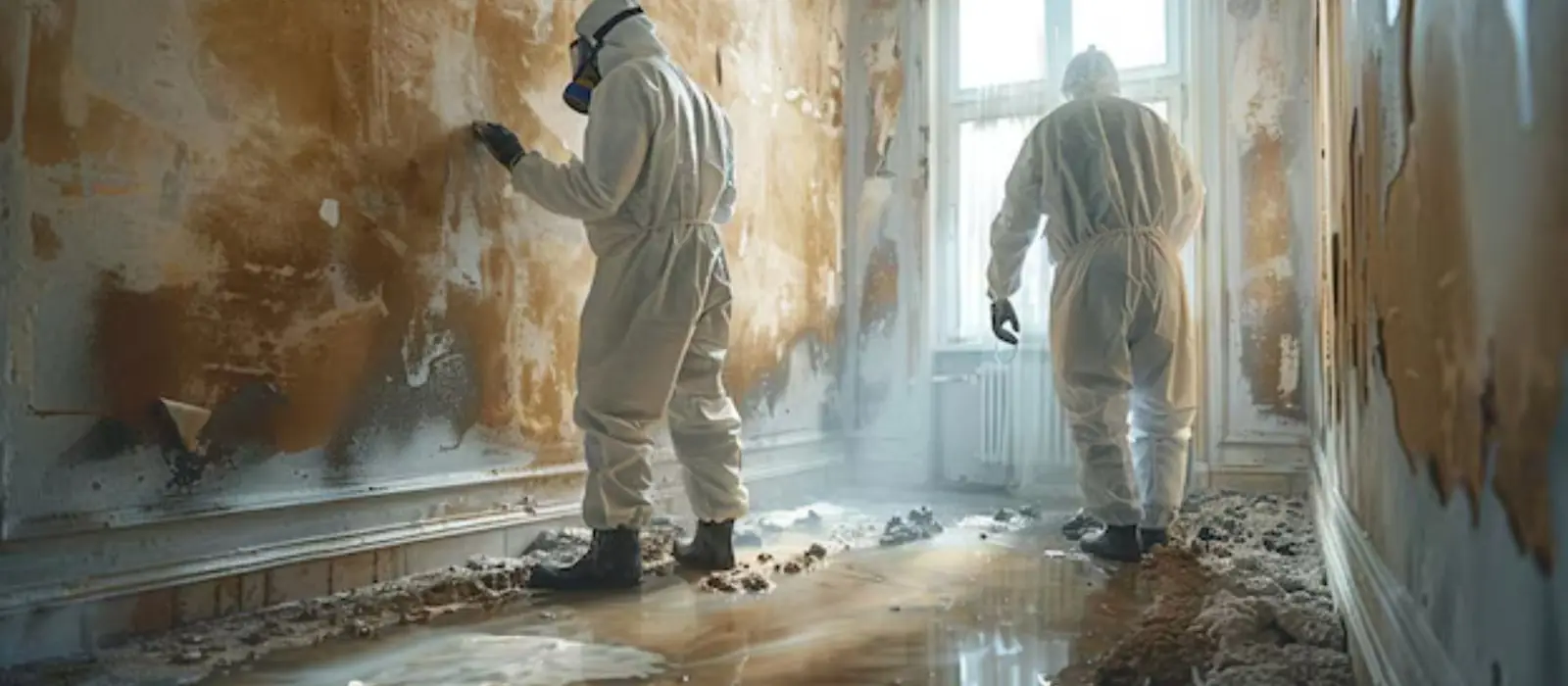
Start with the water, not the mold
Per the EPA, every type of mold depends on water or moisture to grow. It also calls it impossible to remove every spore from an indoor space. Put those two facts together and the goal becomes clear. Remove the visible growth, remove the moisture, and keep it from coming back by controlling humidity.
So the first question is never what to scrub. It is where the water came from and whether it is still arriving.
A short list of usual suspects helps. Walk the house with it before you decide the problem is only the spot you can see. Growth in one corner often has a source two rooms away.
- A plumbing leak inside a wall, under a floor or above a ceiling.
- A roof or window leak that shows up after storms.
- A crawl space or basement that stays damp.
- A past flood or water event that was not dried in time.
- Condensation from poor ventilation in a bathroom, laundry or closed seasonal home.
The five stages of a real cleanup
- Assess and find the source. Meter readings and thermal images map the wet areas. The leak is stopped or flagged for a plumber or roofer.
- Contain the area. Sealed sheeting walls off the work zone, and filtered air machines pull spores and dust out of the air before they reach clean rooms.
- Remove what cannot be saved. Carpet, ceiling tile and other porous items are often discarded, and wet drywall and insulation frequently go with them.
- Clean and dry. Hard surfaces get a detergent wash, then air movers and dehumidifiers dry the space until readings come down.
- Verify. A visual check, moisture readings and, if needed, lab sampling confirm the work is finished before rebuilding starts. Closing a wall over damp framing is how a second round of mold begins. Readings taken before and after the work show what changed, which is what a buyer or lender will want to see.
When the home also suffered a water loss, drying is its own scope. That is covered under water mitigation, and the rebuild afterward is water damage repair. The full process for the mold itself is on the mold remediation page.
Why bleach alone is not a plan
Bleach is on every shelf, so it is the first thing people try. The EPA's position is that it should not be a routine step in mold cleanup. The agency also warns against pouring chlorine bleach into anything that contains ammonia.
A spray on the surface does nothing for the leak behind the wall. It also does nothing for porous material that has to be removed. For hard surfaces, the EPA points to a plain wash with detergent and water, and a full dry afterward.
Clearance testing for a sale or a loan
The EPA's view is that visible growth usually makes sampling unnecessary, and there are no federal limits for mold or spores to measure against. So testing before a cleanup is rarely the first step. Testing after is a different matter, because a buyer, lender or insurer may ask for proof that the problem was handled.
If a sale or loan is involved, ask early who will write the final verification, and what it will include. Many buyers prefer an independent tester over the company that did the work. Check with your agent or lender about what they require.
Three checks, three different jobs
| Check | What it answers | Who usually does it |
|---|---|---|
| Visual and odor check | Is visible growth gone and the smell absent | The contractor and you |
| Moisture readings | Are the materials dry enough to close up | The contractor |
| Lab sampling | A written record of conditions for a buyer or lender | A tester chosen with the buyer or lender |
Ask whether the crew follows S520 and get the scope in writing. Keep the scope, photos and readings in one folder, since together they become your paper trail with a buyer, lender or insurer.
Mashpee note: mold after flooding on the Cape
Mashpee's 2017 Hazard Mitigation Plan records a history of coastal flooding. Hurricane Bob, on August 19, 1991, flooded the causeway near Amy Brown Road, and the National Weather Service reports a surge of 12 to 15 feet in the area. The January 24, 2005 blizzard caused coastal flooding with major damages to homes in vulnerable areas.
A flooded Cape house has a clock. The EPA's drying window is 24 to 48 hours, and a house that is hard to reach after a storm can easily miss it. Start drying as soon as it is safe, and do not wait for a full insurance conversation.
On the insurance side, the Massachusetts Division of Insurance tells homeowners to document damage with photos inside and outside, note how high water reached, separate damaged from undamaged items, and protect property from further harm if it is safe. It also says standard homeowners policies do not cover flood, which is a separate policy. Check your policy.
Stay out of standing water that touches outlets or panels, and call the utility or 911 for electrical or gas risk before you call the restoration line. Flood-related work is covered on the flood damage restoration page. Homes near the coast in Falmouth and East Falmouth saw seawall and shoreline damage in Bob, so a house near the water should be checked for hidden moisture after any surge.
Water or mold in your home right now? Call the 24/7 line: (508) 446-9244
Questions Mashpee Homeowners Ask
Can mold be removed completely from a house?
Not literally. Some spores are always present indoors, so the realistic goal is to remove visible growth, fix the moisture source and control humidity. No honest company promises that mold will never return.
What is clearance testing?
It is testing after remediation that documents the condition of the home. It is most often requested for a sale, a loan or an insurance file. It is separate from cleanup, and who performs it is worth deciding before work starts.
Do I need to test before cleaning?
Usually not. With visible growth, sampling adds little, and testing earns its place afterward, when a buyer, lender or insurer wants documentation.
Is bleach enough for a small patch?
Not as a plan. A small patch on a hard surface needs detergent, water and full drying, and the water source must be fixed or the patch returns. Bleach should never be combined with ammonia cleaners.
How long do I have after a flood to dry the house?
About 24 to 48 hours, according to the EPA. In practice, a flooded house needs equipment quickly, and a moisture meter shows whether materials are really dry, not just dry to the touch.
What happened at Amy Brown Road in Hurricane Bob?
According to Mashpee's 2017 Hazard Mitigation Plan, Hurricane Bob on August 19, 1991 flooded the causeway near Amy Brown Road. It is a reminder that coastal flooding is part of the town's record, and homeowners near the water should know their flood zone and coverage.