Drying is measured, not guessed
A wall that feels dry to your hand can still hold water inside. That is why crews take moisture readings every day and compare them to a dry reference from the same house. The job ends when the numbers match, not when the calendar says so.
Many jobs run several days, and dense materials can run longer. Treat any number you read online, including ours, as a starting guess. The size of the room, the temperature and how long the water sat all change the answer.
Typical pace by material
| Material | General pace | What slows it |
|---|---|---|
| Drywall | A few days | Paint layers, insulation behind |
| Carpet and pad | Often removed | Contaminated water |
| Hardwood floor | Several days to weeks | Thickness, finish, subfloor |
| Concrete slab | Longest of all | Density, cool air |
Treat those pace labels as general ranges, not promises. A thin interior wall on a warm day will beat a thick plaster wall on a cold one every time. Wood is slower than drywall, and concrete is slower than both, because dense materials release water gradually. Water that soaked a material for days also takes longer to leave than water that sat for an hour.
The goal is a number
The ANSI/IICRC S500 standard sets the framework for drying. Crews establish a dry standard by measuring unaffected materials, then dry the wet ones until they read close to it. Ask the company you hire whether its crews follow it.
Air matters too. EPA lists relative humidity below 60 percent, ideally 30 to 50, as the indoor target and says to run dehumidifiers when needed. The same EPA guide says materials dried within 24 to 48 hours after a leak usually will not grow mold.
What each machine is doing
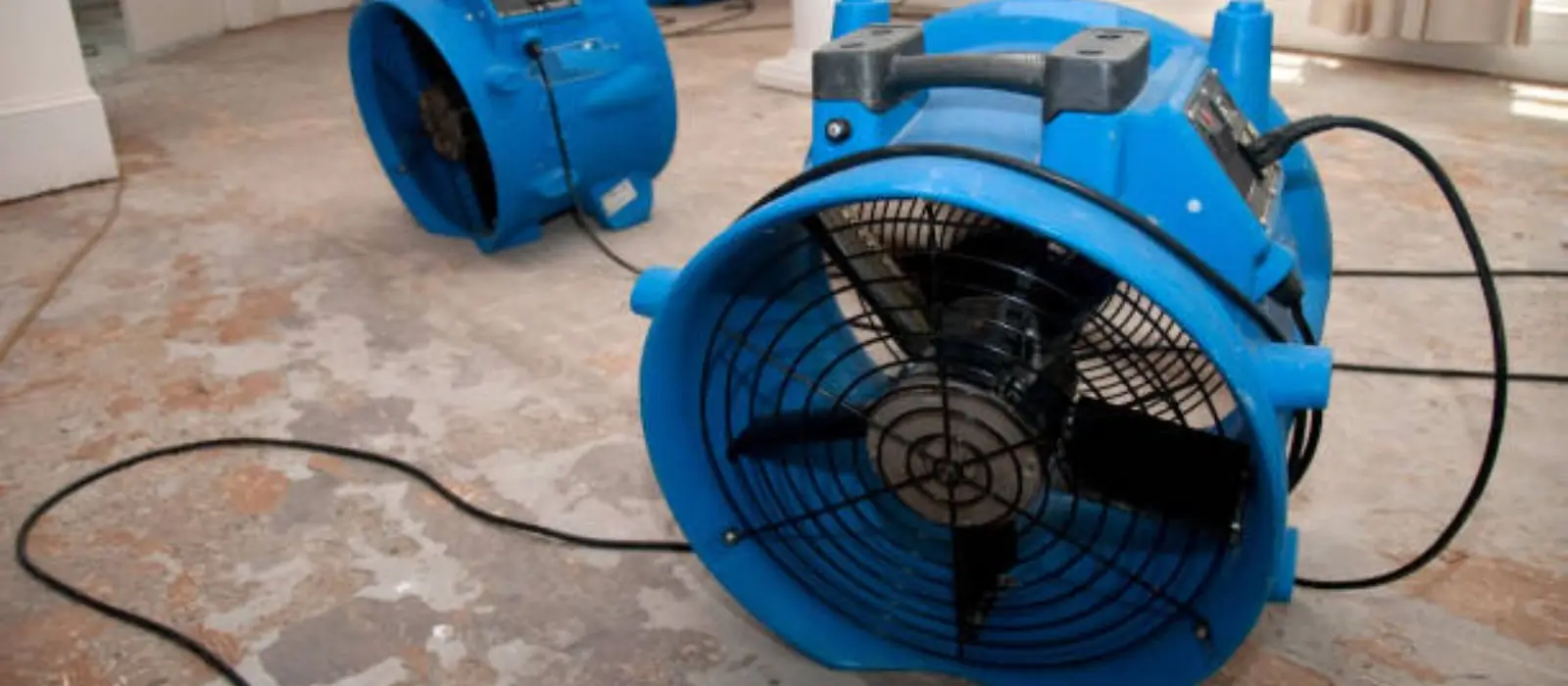
- Air movers push dry air across wet surfaces so water can leave them.
- Dehumidifiers pull that water out of the air so it does not settle again.
- Extraction units remove standing water before drying starts.
- Thermal imaging cameras locate cool, wet areas so meters can confirm them.
- Moisture meters give the numbers that decide when to stop.
Why you should not switch equipment off early
The noise and the warm room get old fast, so people shut machines off after day two. That is the single most common mistake. The surface dries first, and the water inside slowly returns to the face of the wall once the machines stop.
That can lead to swollen baseboards, cupping floors and the smell that sent you looking in the first place. Let the crew confirm the readings, then remove the equipment.
When drying stalls
- Check whether the water source is truly stopped.
- Look for hidden pockets such as insulation, a wall cavity or a cabinet base.
- Open a small section so air can reach the cavity.
- Adjust the machine placement or add a dehumidifier.
- Confirm power is reaching every machine on its own circuit.
- Recheck the readings before deciding to remove the material.
A stall is information, not failure. Often it means there is wet material still hiding behind a finished surface.
What a typical drying visit schedule looks like
- Day one, water is removed, wet materials are cut out and equipment is placed.
- Day two, the crew checks readings and adjusts machine positions.
- Days three and four, surfaces that were wet start to approach the dry reference.
- Day five or later, remaining pockets are found, opened or dried further.
- Final visit, readings are matched to the standard and equipment comes out.
That outline is only a rhythm. A small leak can finish sooner, and a flooded basement slab can stretch on.
What matters is that every visit adds a reading to the log. A missing log is the clearest sign a job is being run by the calendar and not the meter.
Readings worth asking for
- The dry reference reading for each material type.
- The reading for each wet spot on day one and each visit after.
- The room temperature and relative humidity.
- A note on any material that was removed and why.
Cold rooms dry slowly because cold air holds less moisture. A shut-off heating system in a winter outage can quietly add days. Ask the crew to record the room temperature next to every moisture reading.
How to help the crew
Keep doors and windows closed unless the crew says otherwise, because open windows let humid air back in. Do not move machines to other rooms. Keep pets and children out of the drying area.
If you want to see the process from the first call, read about emergency water removal and water mitigation.
Not sure your home is drying?
Call the 24/7 line and ask for a moisture reading before you decide to stop the machines.
Mashpee note: storms and power outages delay drying
The town hazard plan records the January 24, 2005 blizzard, which brought coastal flooding and major damages to homes along vulnerable areas, along with major power outages. Drying equipment needs steady electricity. When the grid is down, the machines stop and the wet materials keep soaking up moisture.
So a storm-related job can run longer than a pipe leak. If the power is out, tell your crew right away, ask about generator power, and never run a generator inside a home or garage. Document the outage dates for your records.
If you live in East Falmouth or Falmouth, the same planning applies to any storm that cuts your power.
Water or mold in your home right now? Call the 24/7 line: (508) 446-9244
Questions Mashpee Homeowners Ask
How long before I can stop running the machines?
Only when the crew's readings match the dry standard. Stopping earlier risks moisture returning to the surface.
If the crew needs more days, ask them to show you the reading that justifies it.
Does opening windows speed up drying?
Usually no. Outdoor air can be humid, and open windows interfere with the dehumidifiers. Follow your crew's instructions.
Why is my hardwood floor still wet after a week?
Hardwood is dense and has a finish that slows water leaving it. Sometimes the subfloor underneath holds water. Your crew can recheck readings and adjust equipment.
Is the noise necessary?
Air movers and dehumidifiers are loud, but they are the reason the structure dries in days and not weeks.
Ask the crew about quieter placement for bedrooms and whether machines can pause at agreed times.
What happens to drying when the power goes out in Mashpee?
Equipment stops, and the wet materials stay wet. The January 24, 2005 blizzard caused major power outages, so storm-driven jobs can run longer. Tell your crew about the outage and ask about generator options.