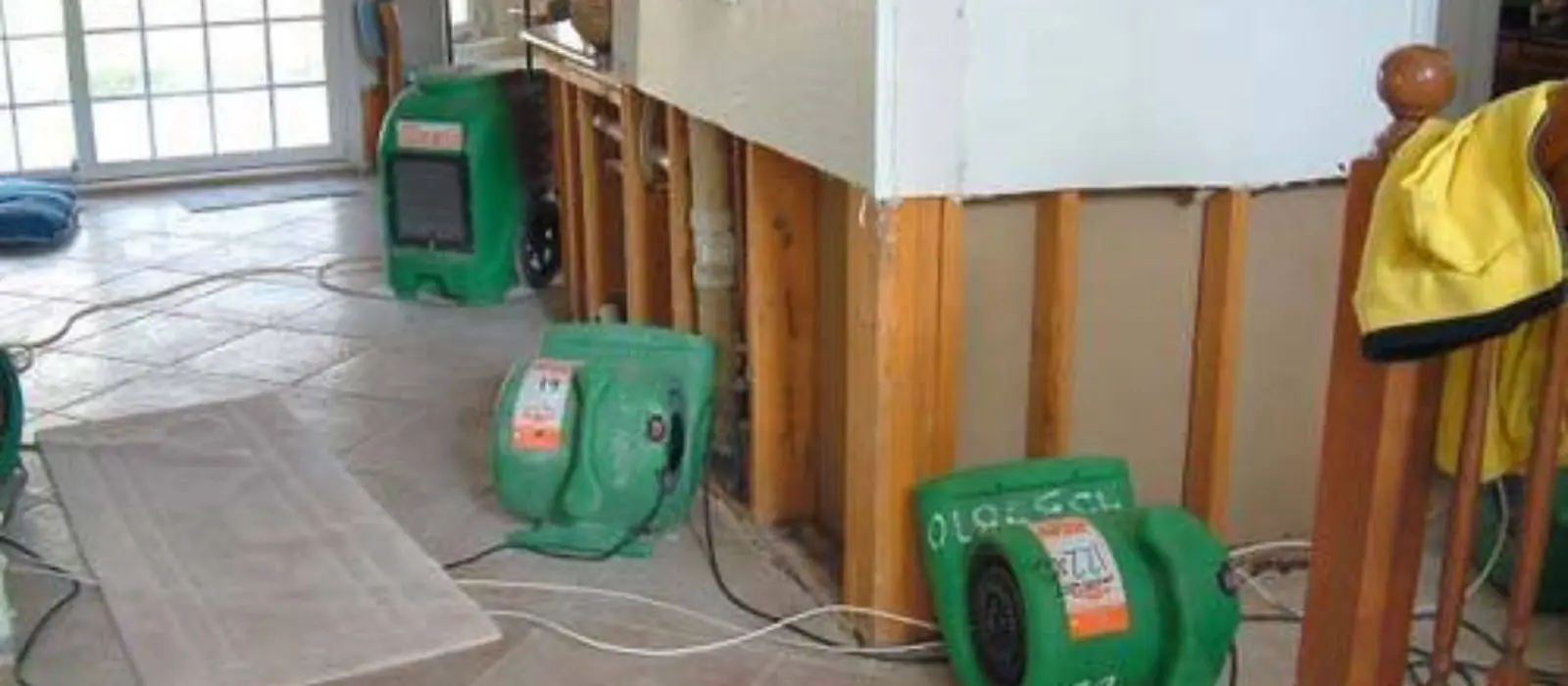
Cut it or dry it? A simple test
Drywall is gypsum between paper faces. Water weakens both, so the question is whether the board has kept its strength and shape. If it has, drying in place can work. If it hasn't, it comes out.
| Condition | Usually | Why |
|---|---|---|
| Clean water, wet less than a day, firm and flat | Dry in place | Board keeps strength, paper intact |
| Soft, crumbling or swollen at the bottom edge | Cut and replace | Gypsum core has failed |
| Sewage or floodwater contact | Cut and replace | Porous and cannot be cleaned |
| Mold growth on the face or back | Cut and replace | Follow ANSI/IICRC S520 |
| Wet more than 48 hours | Case by case | Mold risk rises, meter decides |
What a flood cut is, and where to make it
A flood cut is a horizontal cut through the drywall above the wet line, so the lower section can be removed and the cavity opened. Crews cut with a margin above the highest visible wetness, then check inside with a moisture meter to see if the water wicked higher.
Water climbs drywall by capillary action. A wall that looks wet to ankle height may be damp at knee height behind the paint. That is why the cut is made above the line you can see.
Cutting full sheets from floor to ceiling is easier to finish cleanly. Cutting a band is faster and cheaper on materials, but shows more seams. Your crew should explain the trade-off for your wall.
The insulation behind it
Fiberglass batts that get wet lose their insulating value and hold water against the framing. They are normally removed if soaked. Closed-cell spray foam is different, and it often dries in place because it does not absorb water.
Studs and the bottom plate get dried with air movers, a dehumidifier and sometimes injected air through small holes. A dry reading, not a dry look, tells you when it is safe to close. Our water mitigation page covers that stage.
From bare studs to finished wall
- Confirm framing is dry with a moisture meter and compare it to a dry wall in the same house.
- Install new insulation where it was removed.
- Hang new drywall, using moisture-resistant board in bathrooms and basements if appropriate.
- Tape, mud and sand the seams. Plan for two or three coats with drying time between.
- Prime the whole patch. New drywall is porous and will show through paint without primer.
- Paint the full wall corner to corner. Matching a small patch rarely works.
Baseboards often need to come off and go back on. If they are original wood they can usually be saved if removed carefully. Our water damage repair team handles the rebuild after drying.
Where sheetrock tends to fail first
Drywall rarely fails in the middle of a wall. It fails where water collects, which is the bottom edge near the floor, around a tub or shower, under a window and below a ceiling leak. Those spots are worth a look any time a storm, a pipe or an appliance has leaked.
- Bottom 6 inches of walls in basements and ground-floor rooms
- Corners behind toilets and under sinks
- The wall below a bathroom on the floor above
- Walls that share a pipe chase with a kitchen or laundry
Press a screwdriver tip lightly into the board at those places. Wet or soft gypsum gives, while dry board resists. If it gives, stop and call before you cut anything, since the saturated area is usually larger than the soft one.
Why new drywall shows through the paint
Fresh joint compound and bare paper soak up paint at a different rate than the old wall around them. The result is a patch that looks dull or shiny against the rest, a problem called flashing. Primer evens out the surface before color goes on.
Textured walls add a step. The texture has to be matched with spray or a hand tool before priming, and an old wall that has been painted many times may need a skim of compound to blend the edge.
Sheetrock water damage often reaches a ceiling too. If the same leak soaked both, plan the painting of both surfaces together so the sheen and color match. Homes in Cotuit and East Falmouth with older plaster and newer patches are a good example of mixed finishes.
Common mistakes that cost a second repair
- Closing the wall because it feels dry
- Painting over stains before the source is fixed
- Reusing wet insulation
- Skipping the primer on new board
- Ignoring the baseboard and bottom plate
Each one hides moisture or invites a repeat failure. A damp bottom plate is enough to feed mold behind fresh paint.
Mashpee note: flood-zone status changes what you document
Mashpee's GIS Department can check whether a property sits in a Special Flood Hazard Area. The Building Department answers building questions in those areas and holds Elevation Certificates. The town map includes FEMA flood map layers that show AE and VE zones, and 15 FEMA map panels cover the town.
Why does that matter for drywall? If your home is in a Special Flood Hazard Area, a wet wall may be a flood loss and not an ordinary leak. That changes your paperwork. Photograph the water line on the wall before cutting, measure its height, and keep the photos with your Elevation Certificate if you have one.
Before a large repair in a flood zone, call the Building Department at 508-539-1400 and ask what applies to your scope. Do that before demolition, not after. Flood policies and standard homeowners policies treat these losses differently, so read yours.
Water or mold in your home right now? Call the 24/7 line: (508) 446-9244
Questions Mashpee Homeowners Ask
How high should a flood cut go?
Commonly about a foot above the highest wet line, then adjusted by moisture readings inside the wall.
Can wet drywall be saved?
Sometimes. Clean water, a short wet time and firm board can dry in place, ideally inside the 24 to 48 hour window the EPA gives for drying. Soft or sagging board is replaced.
Do I need to replace insulation too?
Wet fiberglass usually yes, because it holds water against the framing. Spray foam can often stay. A crew checks with a meter before deciding.
How long before I can paint?
After the framing and board read dry and the joint compound has cured. Rushing it is the most common cause of peeling.
How do I find out if my house is in a flood zone?
Ask the Mashpee GIS Department, which can check whether a property is in a Special Flood Hazard Area. The Building Department holds Elevation Certificates.
Does the Special Flood Hazard Area label change my insurance?
It can affect which coverage applies. Standard homeowners policies leave flood out, according to the state Division of Insurance. Ask your insurer and check your declarations page.