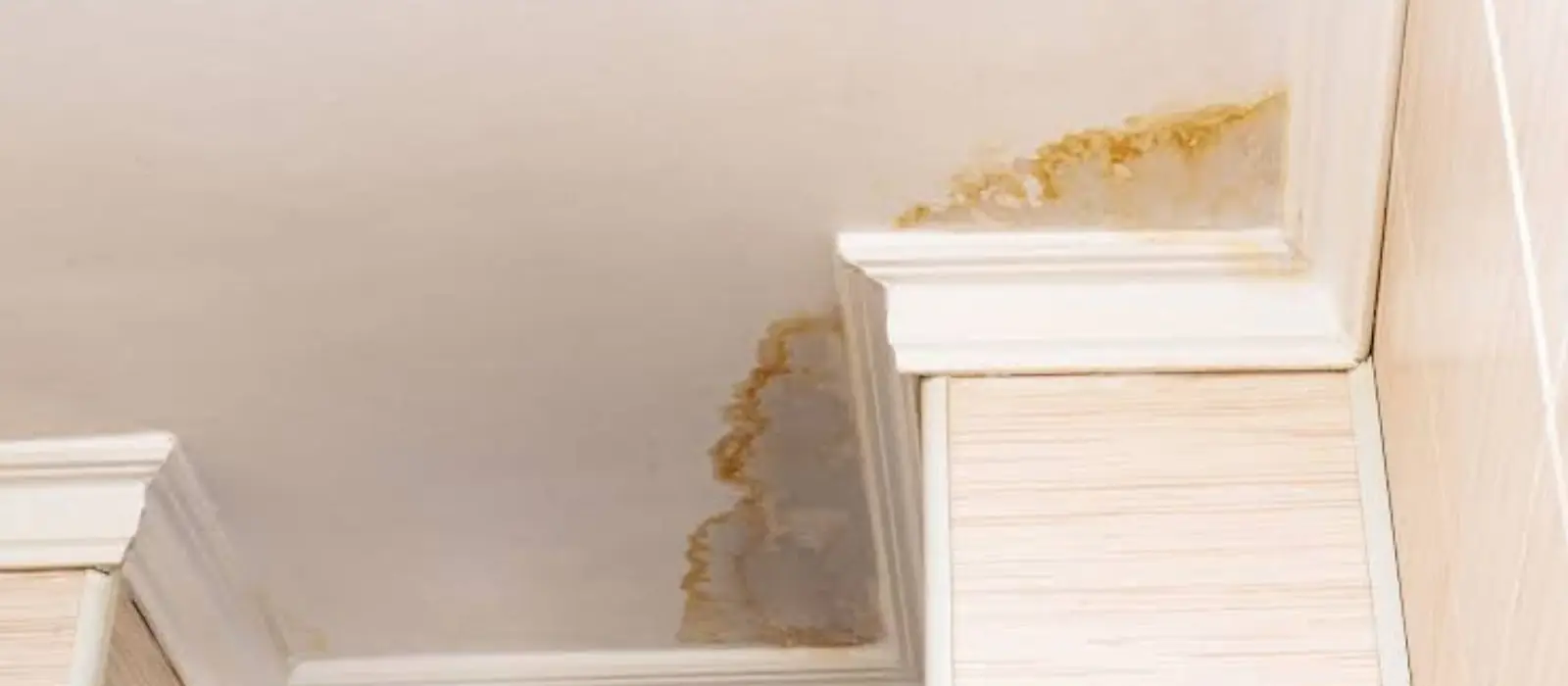
Start with the stains you can see
Walk each room with a flashlight and look at the ceiling first. Water travels down and sideways before it shows, so a stain is usually a few feet away from the real source. A brown or yellow ring with a darker edge often means the area got wet, dried, and got wet again.
Paint and wall surfaces tell the next part of the story. Bubbling, peeling, or a wall that feels soft when you press it with a thumb points to moisture inside the drywall. Baseboards that pull away from the wall and trim that swells are close cousins of the same problem.
| What you see | Where it often shows | What it may point to |
|---|---|---|
| Brown ring on ceiling | Below bathrooms, roof lines | Supply leak or roof leak |
| Bubbling or peeling paint | Exterior walls, bath walls | Moisture behind the surface |
| Soft or crumbling drywall | Under windows, near sinks | Long, slow wetting |
| Rust on screws or nails | Ceilings, utility rooms | Repeated dampness |
| Dark spots or fuzzy growth | Corners, closets, behind furniture | Ongoing moisture, a possible mold start |
What your nose and ears catch first
A musty, earthy smell in a closed room is one of the earliest signs, and it often arrives before anything is stained. If the smell gets stronger when the heat or air conditioning kicks on, the source may be inside a wall or duct run. A sewer smell near a floor drain is a different problem and points to a drain or backup issue.
Listen on a quiet evening. A faint hiss, a drip inside a wall, or a pipe that ticks and knocks can mean a pressurized line is leaking. If you hear water running while every tap, toilet and appliance is off, treat it as a leak until proven otherwise.
Floors and windows give honest clues
Wood floors cup at the edges when the underside absorbs moisture. Laminate seams lift, vinyl tiles curl, and carpet feels cool and damp near walls. A spongy spot underfoot can mean the subfloor has been wet for a while.
Windows leak in their own way. Look for stains on the sill, swollen casing, paint lifting on the trim, and water pooling in the track after rain. Fogging between the panes is a failed seal, which is a nuisance but not the same as a leak into the wall.
A ten-minute checklist you can run today
- Check ceilings under every bathroom and the kitchen for rings or sagging.
- Press on drywall near sinks, tubs and exterior corners for soft spots.
- Open the cabinet under each sink and look for staining, swelling or a damp smell.
- Look at the water heater base and the washing machine hoses for drips or crusty mineral trails.
- Scan the basement or crawl space walls for dark lines, white powder or standing water.
- Check the attic underside of the roof deck after a rain.
- Read your water meter, wait an hour with everything off, and read it again.
- Compare this month's water bill to the same month last year.
How a moisture meter settles the argument
Your eyes can be fooled by a stain that dried years ago. A moisture meter reads how wet a material is right now. A pin meter pushes two small probes into the surface, while a pinless meter scans a few inches deep without leaving holes.
Pros compare a suspect wall against a dry reference reading from the same material in the same house. A thermal imaging camera helps by showing cooler patches, but it reads temperature, not water, so a meter confirms what the camera hints at.
Humidity matters too. The EPA suggests keeping indoor relative humidity under 60 percent, with 30 to 50 percent as the ideal. A hygrometer costs little and tells you whether the air itself is feeding the problem.
Hidden signs that hide behind the walls
- A water bill that climbs with no change in how many people live in the home.
- A warm spot on a slab floor, which can suggest a hot water line leaking underneath.
- Allergy-like stuffiness that eases when you leave the house. Take that to a physician, not a web page.
- Wallpaper seams opening on an interior wall far from any window.
- Pests such as silverfish or centipedes gathering in one damp area.
None of these proves a leak alone. Two or three together, though, justify opening a small inspection hole or calling for a meter reading.
What to do the moment you find a sign
Stop the source if you can do it safely. Shut the fixture valve or the main water shutoff, and move belongings away from the wet area. The EPA mold guide puts the drying window at 24 to 48 hours, so speed counts, and pooled water calls for emergency water removal right away.
If water is near outlets, a panel or a ceiling light, stay out of the room. Cut power only if you can reach the panel while dry, and call the utility or 911 for any electrical or gas concern before calling a restoration line.
Not sure how bad it is?
Describe what you see and we will tell you whether it needs a water damage cleanup visit or a simple fix.
Mashpee note: your water bill is a clue, not a verdict
The Mashpee Water District, an independent municipal entity, supplies town water and handles connection and system questions. If your bill jumps with no change in use, call the district first and ask how to read your meter and what the reading history shows. A rise that matches a leak, such as a toilet running all night, is worth pairing with the meter test above.
To test, turn off every tap and appliance, note the meter reading, wait an hour, then read it again. If the numbers moved, water is going somewhere. That result will not say where, which is exactly when a moisture meter walk-through earns its keep. Homes in Falmouth and Cotuit follow the same logic, though each village has its own water supplier.
Water or mold in your home right now? Call the 24/7 line: (508) 446-9244
Questions Mashpee Homeowners Ask
How can I tell old water damage from new?
Old stains tend to have hard, dry edges and often several rings, while fresh damage feels cool or soft and may still be growing. A moisture meter gives the clearest answer because it reads the material, not the color.
Is a musty smell always mold?
No. A musty smell means moisture and microbial activity may be present, but only testing and inspection can say what it is. Fix the water source first, then ask about testing under the S520 mold standard.
Can a leak hide inside a wall for months?
Yes. A pinhole in a supply line may only dampen the cavity, so stains arrive late. Soft drywall, a rising bill and a hissing sound are the clues to chase.
Who do I call about water service questions in Mashpee?
The Mashpee Water District handles town water connections and system questions. Contact the district about meter reading and billing history, and call a restoration company only after you have found water inside the home.
Should I open a wall myself to look?
A small test hole beside the stain is reasonable if no wiring is nearby and the power to that circuit is off. Larger demolition is better left to a crew that can dry and document the area.