Why a phone number is a guess
Two houses with the same stain can need very different work. One has water in a single drywall bay, and the other has wet insulation, subfloor and a cabinet base. Until someone measures the moisture, any price is a guess.
That is why we explain the scope and price before work starts, after we have seen the damage with a meter in hand.
Six things that set the price
| Factor | Pushes scope up | Keeps scope smaller |
|---|---|---|
| Water category | Sewage or flood water | Clean supply line water |
| Area affected | Multiple rooms or floors | One room |
| Materials | Hardwood, plaster, insulation | Tile, concrete, vinyl |
| Time since the loss | Days of soaking | Caught within a day or two |
| Drying days and equipment | Dense materials, many machines | Light materials, few machines |
| Rebuild scope | Cabinets, flooring, framing | Paint and trim |
Notice that time shows up twice. Water left alone spreads into more materials and slows drying, which expands both the mitigation and the rebuild.
Mitigation and repair are priced differently
Mitigation is the emergency stage. It covers water removal, tear-out, drying equipment and daily monitoring. See water mitigation for what that stage includes.
Repair is the rebuild. It covers new drywall, paint, flooring, trim and sometimes cabinetry. See water damage repair for that stage. Asking for them as two line items keeps the quote readable.
Why two quotes can look so different
- One company priced drying for three days and another for five, based on different moisture readings.
- One scope removes wet baseboard and the other leaves it.
- One includes a thermal imaging camera survey and documented readings, the other does not.
- One assumes Category 1 water and the other found Category 2 or 3.
- One lists permits and inspections, the other quietly leaves them off.
A lower quote is not a bargain if it leaves out the work that has to happen anyway. Ask each company to match its scope line by line.
How a scoped inspection works
- A technician finds the source and confirms the water has been stopped.
- They map the wet area with a moisture meter and a thermal imaging camera.
- They identify the water category under the S500 standard.
- They list what must be removed, what can be dried, and what equipment is needed.
- They estimate drying days and say how readings will be checked.
- You receive a written scope and price before work begins.
Equipment and drying days
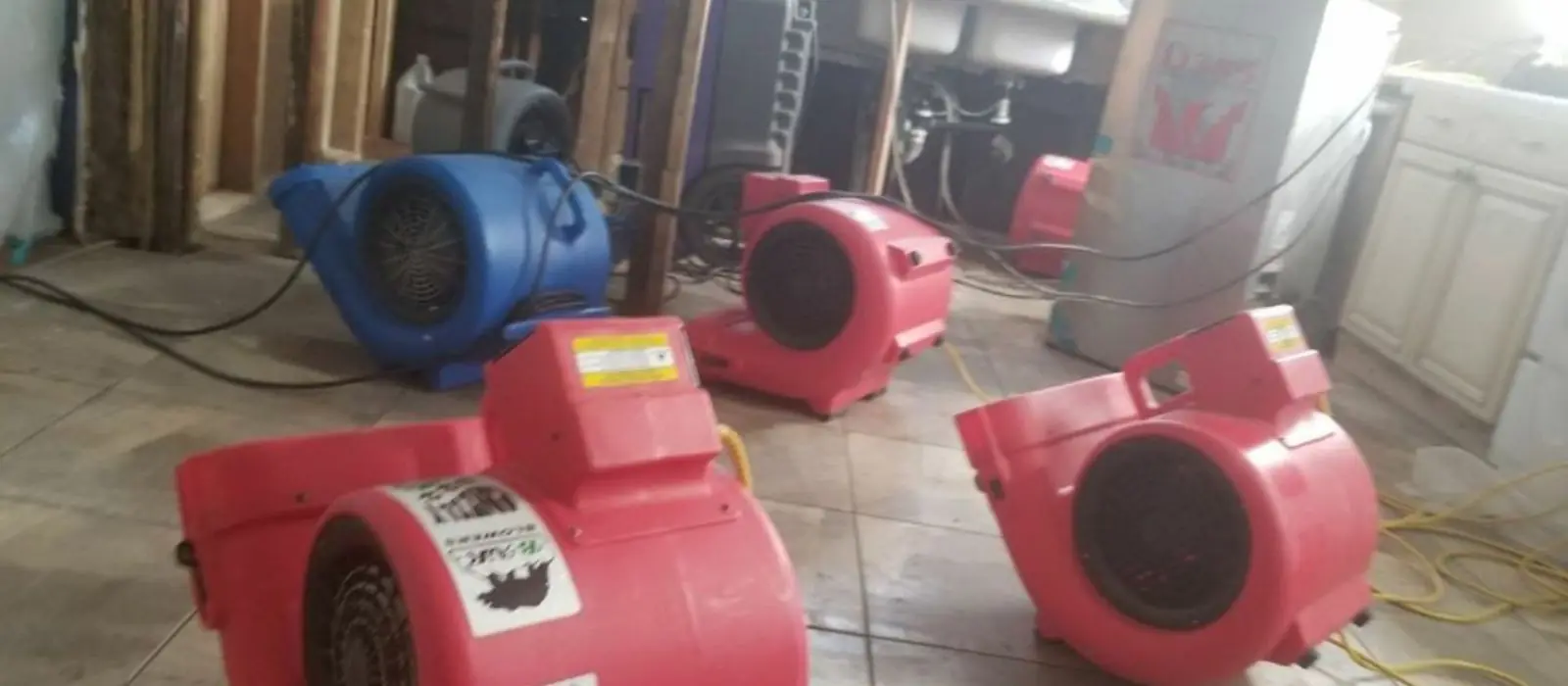
Air movers and dehumidifiers are not billed as a mystery. The count depends on the square footage and how much moisture the materials hold. More days and more machines add up, which is why dense materials like hardwood and plaster cost more to dry than a bath tile floor.
The EPA mold guide notes that materials dried inside 24 to 48 hours usually avoid mold growth. A fast start shortens the total job, and it is the one cost lever every homeowner controls.
Two houses, same stain, different scope
Picture a kitchen supply line that sprays for ten minutes. If someone is home and shuts the valve, the damage may stay in the cabinet base and a strip of floor. A short drying job and a patch of flooring may be all it takes.
Now picture the same line leaking overnight while the family is away. Water reaches the dining room, runs into the basement ceiling, and soaks insulation. The drying plan, tear-out and rebuild all grow, and the written scope should show why.
Questions that make any quote easier to read
- Does the scope list each room and each material separately?
- How many drying days are assumed, and what happens if readings say more are needed?
- Are disposal, protection of undamaged areas and equipment checks included?
- Which tasks need a permit, and who will pull it?
- Is the rebuild part of this quote, or a separate one?
Good answers are specific. Vague answers such as "it depends" are fine once, as long as the next sentence tells you what it depends on.
What changes the scope after work begins
Scopes are written from what can be seen and measured on day one. Once a wall is opened, the crew sometimes finds wet insulation or a second leak behind it. A fair company tells you right away, shows you the photo and updates the written plan.
Ask how changes are approved. A change order that you sign before the extra work happens keeps surprises off the final bill.
Insurance, briefly
If your policy might respond, report the loss early and keep the photos. We do not state what any insurer will pay, so ask your insurer what applies.
Want a scoped plan for your house?
Call the 24/7 line and describe the damage. A technician can walk the house and put the plan in writing.
Mashpee note: permits and paperwork shape the rebuild
The Mashpee Building Department handles permits for construction, reconstruction and renovation. A rebuild that goes beyond cosmetic work, such as replacing framing, plumbing or wiring, may need permits and inspections. Call 508-539-1400 to ask what your project needs.
Timing matters for the schedule. The office is open Monday to Friday, 8:00 to 4:30. Plumbing and wiring inspection requests are taken until 8:30 am, and plumbing, gas and wiring inspections run Monday through Thursday, so a Friday finish can slip a few days.
Insurance documentation also affects the scope. Photos, moisture logs and dated invoices let a reviewer see why each wall was opened, which can shorten disagreements. Homes in Falmouth and Marstons Mills follow their own towns' permit offices.
Water or mold in your home right now? Call the 24/7 line: (508) 446-9244
Questions Mashpee Homeowners Ask
Can you give me a price over the phone?
No. We can describe what drives cost, but a price requires measuring the moisture. Scope and price are explained before work starts.
Why does drying cost more some times than others?
Dense materials hold more water and dry slowly, so they need more machines and more days. Clean water caught early is the cheaper end of that range.
Large open spaces and tall ceilings also need more airflow to move moisture out.
Do I need a permit for water damage repair?
Drying itself usually does not, but rebuild work may. Ask the Mashpee Building Department at 508-539-1400 before framing, plumbing or electrical work begins.
Why would a quote add a thermal camera survey?
The camera shows cooler wet patches that the eye misses, and a moisture meter confirms them. Together they keep the scope honest.
It can also prevent tearing out a wall that turns out to be dry.
When does the Mashpee Building Department take inspection requests?
Inspection requests are due by 9:30 am for same-day service, plumbing and wiring requests are taken until 8:30 am, and the main line is 508-539-1400.